• Home
  • About
  • Transformation Stories
  • Contact Us
  • Blog
    • Blog
    • Perspectives
  • Home
  • About
  • Transformation Stories
  • Contact Us
  • Blog
    • Blog
    • Perspectives
Why it’s so easy to succumb to Entropy
  • September 19 2019|
  • 0 comments |
  • Category : Perspectives

The battle cries in the marketing battlefield are getting louder. But hold on a moment. Are those really battle cries or the cacophony of chaos that emerges from the copycat wars?

It’s hard to ignore the imitation games that brands play these days. Everyone wants to crush the competition. Everyone wants to ride the ‘moments’ wave. How does it matter if the moment is not relevant to your brand? Everyone is doing it and so must we.

Look at this from a distance and you’ll see the amusing resemblance to the tale ‘The Pied Piper of Hamlin’. The piper plays his flute and all the mice in the city follow him to their death.

Unfortunately, that is what entropy does too. It will bring about the death of a brand because, in today’s hyper-competitive market, it is only the authentic, the original, the genuine who will last.

But is this information new? No. So then, why do we continue to succumb to entropy?

When you can’t innovate, copy

Look closer, and you’ll find this to be the marketing weapon-of-choice of many. In a market that grows in hyper-competitiveness in seconds, innovation seems like too lofty a goal. The urge to capitalize on every trend and every moment guide the marketing rulebooks. Who cares if these trends are aligned with your brand purpose?

The copycat mindset seems to be at play here. Since everyone is jumping on the moments and trends wagon, most brands feel like they will lose out their “moment” in the sun. This fear becomes even more real when we look at the digital playing field – one where likes, shares, retweets become a barometer of success. It’s undeniable that brands are getting popularity in these fields. That original tweet about the price of bananas got some many RT’s, didn’t it. But is that what your brand will be known for in the future, well, even, tomorrow?

But coming up with original ideas is easy, said no one ever. And in the face of these forces at play, brands find it easy to piggyback on other’s ideas rather than focusing on their inherent values.

The herd mentality

Hasn’t a teacher or a parent ever asked you “if your friends jump into a well, will you do it too”? Most answers to this have been of vehement denial. Why would you in your right mind jump into a well just because your friends are?

But what if your friends are all buying the latest iPhone? As you see them using the cool features and the even cooler photographs and hear the conversation about how ‘cool’ the phone is, chances are you’ll end up buying one as well.

People are influenced by people. Period. Take a look at the growth of influencer marketing and you’ll know what we mean. Marketers and brands leverage this herd mentality (meaning “ the obedience of the individual to the mass, blindly and without reflection…”) to influence their customers. At the same time, they are influenced by the herd mentality too – everyone is doing it and so must I.

You reason that since everyone is leveraging striking an emotional cord as a marketing campaign, you feel you must too. But does this work for you?

Axe, for example, took the idea of the emotional cord and worked their campaign “Find Your Magic” to deconstruct a culture of “toxic masculinity”. Axe made a complete pivot from its old ‘bro-centric’ ideas of man and womanhood. They used no influencers nor celebrity ambassadors to create an emotionally charged campaign. And they won.

McDonald’s, on the other hand, used grief to build an emotional connect with a TV ad about a boy asking about his dead father. The ad was widely criticized for exploiting child bereavement to push a brand (especially since it was in queasy proximity to father’s Day) and also drew many unflattering comparisons to Nationwide Insurance’s “dead boy” Super Bowl TV Spot.

Yes, the audience today demands emotional resonance – but not at the cost of authenticity. They will call you out.

Authentic is just too hard

Had it been easy, everything in this world would have been original and authentic.

It is far easier to co-opt and exploit an issue or a trend, even in a cynical, emotional or humorous way, than to build something authentic. Take a look at the ‘rainbow washing’ that happens every June when Pride fever grips all. Or for that matter, look at how brands jumped on the ‘issue-driven’ wagon.

Where Pepsi’s tone-deaf ad featuring Kendel Jenner became the most mocked campaign in 2017 as they tried to address diversity. At the same time, Heineken got plenty of claps for its “Worlds Apart” campaign that not only addressed the diversity issue but also other hot button topics such as climate change, feminism. Heineken steered away from the corn syrup unity formula and brought together real people with opposing views and started a dialogue. When it came to ‘authenticity’ the Heineken campaign won as they did not focus on presenting vague representations of conflicting points of view.

We cannot emphasize enough – entropy will eventually lead your brand to a fall. Because when you succumb to the forces of chaos you are drifting away from your inherent positive valence. You are shifting towards something that is not your own. How can you position yourself in a differentiated manner when you become a clone? How can your voice be heard if you swim in a sea of noise?

So while the temptation to do what others are doing might be high, and the rewards might seem immediate, know that it is only the original and the authentic that survive the test of time. The copycats fade into oblivion.


Write to us on info@lokusdesign.com.


It’s time for brands to stop talking and start doing
  • September 19 2019|
  • 0 comments |
  • Category : Perspectives

From the look of things, it seems to me that the branding industry seems to be facing some sort of “Purpose Tsunami”. Everyone seems to think that ‘purpose’ is the new advertising secret weapon. Brands are identifying hot causes, the more controversial the better, and then tagging along with campaigns to these topics. All in the name of purpose and to show that they care.

You might ask, “What’s so wrong with that? Aren’t they creating awareness…doing good?” But from where we are standing, all we see is a lot of words and no meaning.

We get why purpose is suddenly in the spotlight. The millennials love purpose. The age of the woke customer is upon us. People want to believe that they are part of something bigger…’doing good’ is social currency. From that perspective, these messages are easy wins. You can’t fault a company for wanting to save the whales, right?

People want to buy from companies that follow their purpose and are willing to step out of their comfort zones to push the purpose envelope. It’s also said that people want to work in companies that have a strong sense of purpose. That helps them feel more connected to the company because then, they feel, that they are a part of something genuine. This helps them anchor themselves, their beliefs and values to it. Because today, unlike yesterday, not only is the customer woke, the employee is woke too.

A variety of statistics also support the rise of purpose.

Consumers are no longer making decisions based solely on product selection or price; they’re assessing what a brand says, what it does and what it stands for.

  • Nearly half of US consumers who are disappointed by a brand’s words or actions on a social issue complain about it.
  • Nearly eight-in-10 (79%) Americans say they are more loyal to purpose-driven brands than traditional brands
  • Consumers feel a stronger emotional connection to purpose-driven brands
  • Brands with a high sense of purpose have experienced a brand valuation increase of 175% over the past 12 years compared to the median growth rate of 86%

Clearly, the consumer expectations from a brand have never been higher. No wonder, brand purpose is the marketing buzzword of the year.

However, to us, much of what is being propagated in the name of Brand Purpose looks suspiciously like opportunism. Brands are following the money and not the purpose. That’s just purpose washing.

Let’s take Budweiser as an example. Of course, we have no problem with the beer. However, for International Women’s Day last year, Budweiser showcased female employees in departments such as mechanical engineering, health management, etc. Nothing wrong here.

What stuck out was the fact that Budweiser, much like most alcoholic beverage companies have historically been running sexist advertisements as the norm. The brand still has Budweiser Girls. Well, of course, as is expected from all companies today, they take women empowerment seriously (sarcasm alert here). And while they have gone and revamped their ads to suit the modern-day sensibility, there’s no real attempt to disavow the company’s past ads or for that matter, Budweiser Girls.

The Gillette campaign that targeted toxic masculinity is another example we must look at. We actually like the campaign. We believe they may be serious about turning a new leaf. But are they going far enough? Now if Gillette really wanted to put their money where their mouth is, a good starting point could perhaps be the pink Venus range for women. Let’s start with, why names like Embrace and Passion?

Let’s also look at the curious case of Unilever. The brands Axe and Dove both are under the Unilever umbrella. But notice how Dove focuses on spots like Real Campaign for Beauty while Axe Body Spray serially objectifies women?

And let’s not even get into the ‘rainbow pandering’ that happens during the LGBT Pride movements. While this is a welcome change that shows society’s cultural shift towards equality, it becomes pandering when companies exploit LGBTQ rights without meaningful action at their organizations. Example, Victoria’s Secret showed support for LGBTQ during pride month, but the brand has serially refused to have transgender models for their annual fashion shows. Hardly equality, is it?

Retailers like H&M, Primark, Target, and Levi Strauss all have gone gung-ho about rainbow apparel. But much of that apparel is manufactured in counties where it’s illegal to be gay.

We have an issue with this kind of marketing because such marketing creates dangerous blind spots and creates an illusion of progress. And also, let’s face it. The woke customer is smart enough to see through this charade. Remember how Pepsi was called out for its Black Lives Matter campaign?

Now Harvard Business Review credits ‘purpose’ as the key to 21st-century success. And with that, we have most brands singing the song of conscious capitalism – capitalism that has a soul. But when Starbucks doesn’t pay taxes, or Johnson and Johnson keeps 98% of its cash (amounting to an approximate $42 billion) offshore in 2017, they show that they don’t really care about the well-being of the people you serve.

Don’t get us wrong. We are not saying brands should drop everything and embrace causes or charities. We are saying that they should be true to their Purpose. And Purpose must be linked with action. In that light, if a cause aligns with that Purpose, then they should whole-heartedly climb aboard. If not, then let it run its course independent of your opportunistic participation.

It is high time that brands understand that and put their money where their mouth is. Because otherwise, ‘purpose’ will lose its meaning. Look around, it’s already being mocked. Let’s not confuse brand activism with brand purpose and let’s also not just jump on the activism wagon for the marketing impact.


Write to us on info@lokusdesign.com.


Yes, Brand Purpose matters to your employees (more than you think)
  • September 19 2019|
  • 0 comments |
  • Category : Perspectives

Have you seen Toy Story 4? I think it’s perhaps the best one of the series. What I loved in the movie was the inner turmoil the main protagonist, Woody the cowboy sheriff, faces in the absence of his purpose. With his first owner gone to college and a current owner who doesn’t find him interesting enough, Woody fumbles until he finds his purpose in reuniting a lost toy with his current owner.

Before you think this is just another movie review you didn’t want to read, let me assure you that it’s not. We often undermine the power of purpose…thinking it may be a ‘good to have’. But what is life without purpose? What is anything without purpose? And branding is not free from the need to be purposeful as well.

Brand purpose, the reason for the brand to exist, drives an idealistic view of how you want your audience, your customers, to view you. Without purpose, you cannot engage with your audience at a meaningful level. And in the age of entropy, this can be the death knell of a brand.

However, brand purpose does not matter only to your external customers. It matters, and matters perhaps a great deal more, to your internal customers – your employees.

Purpose drives satisfaction

According to a study by the Harvard Business Review, 89% of executives believed purpose drives employee satisfaction. 84% of those surveyed believed that it aids an organization’s ability to transform. 80% stated that it helps in increasing customer loyalty.

Think about some of the greatest brands – Apple encourages you to ‘think different’, Nike that says, ‘just do it’, GE that urges you to ‘put imagination to work’. The essence of their purpose not only reflects in the products that they build but it also resonates across the entire organization.

While the customers keep the lights on, without purpose you won’t be able to keep your employees anchored to what you do.

Purpose drives ownership

IBM is a great example of a brand that has worked to strengthen its purpose continuously. They have continued to strengthen their brand purpose to not only drive growth but to give greater meaning and inspiration to their employees’ lives. By doing so, they have given their employees something to aspire to and have given them a reason to care.

Purpose drives employees to care. Employees who care will have a higher sense of ownership. A higher sense of ownership automatically translates to greater productivity. Greater productivity impacts the bottom line positively. Ownership also drives motivation. And a motivated workforce is more engaged and enabled. Driven by purpose, people work towards creating products and services that drive value in the life of the customer. And the customer drives the profits. The math is fairly simple.

The age of the woke employee

It is not just the age of the woke customer. It is the age of the woke employee too. Your employee is someone else’s customer after all, isn’t she? So logically, the rules of engagement have to be the same for the customer and for the employee.

PwC says that 30% of employees who work with a sense of purpose feel a profound connection to their company. Then there is the fact that by 2025, millennials will constitute 75% of the workforce. And millennials love purpose. They will work for companies whose values and purpose match their own. The old work contract that read “I will work to buy stuff I love” has been replaced with “I will work because it makes me happy”.

Purpose trumps profitability (for your employees, at least)

In the age of this woke employee, purpose also trumps profitability. The Deloitte 2017 Global Human Capital Trends report showed that the millennial workforce looks beyond a company’s financial performance when deciding on a prospective employer.

Your employees are your brand ambassadors. Unless you can inspire them with your brand purpose, how can you inspire your customers? Your employees are your main consumers. And they are watching you. They are watching your words and assessing if these words are translating into action. Words only turn into action when the purpose is linked to the brand in a credible and authentic manner.

The true measure of your brand’s impact shouldn’t begin with analyzing how it impacts the customers. Instead, it has to first analyze if it impacts your employees. It is only when purpose resonates across the organization that your employees will develop a sense of ‘shared purpose’. And when you and your employees have this sense of shared purpose, your customers see authenticity and genuine effort.

So, while you get your swanky cafeterias and pool tables to engage your employees and keep them happy, do take the time to focus on your brands’ purpose. For it is the brand’s purpose that will keep your employees rooted to your company.


Write to us on info@lokusdesign.com.


Designing immersive spatial experiences for reducing Entropy
  • September 19 2019|
  • 0 comments |
  • Category : Perspectives

Related image

Have you heard the story of Chicken Little? The story of the little paranoid chicken who kept alarmingly announcing, “the sky is falling”. Today, Chicken Little could very well be exclaiming “the experience is falling. The experience is falling” as we get sucked deeper into the experience economy.

What’s alarming about being driven by the experience economy, you ask, especially in the context of branding. Aren’t experiences driving businesses? If we take a look around, all brands are now getting hyper-focused to create brand experiences that build their brands’ perception. This makes sense, especially because brand perception is put together with every little piece of interaction with the brand. And of course, that applies to the physical space that accommodates the brand as well.

The space that houses the brand cannot be inanimate. It can no longer be passive. If it is then how can it drive brand experience? How does it then impact brand perception? How does it create a discerning value?

The brand space is not only about accurately positioning the merchandise and the brand logo. It more than color schemes and color palettes. Brand spaces have to be designed such that these convey ‘meaning’ to the customer.

The play of Purpose

So where does the chicken little story play here? Why did we begin with that story?

You see, one of the main objectives of any branding exercise is to stand out in a crowded market place. And today everyone is just doing that. In this constant tryst to stand out in the experience economy we are bombarding our customers with, you guessed it right, ‘experiences’. But have you for a moment thought, ‘am I doing it right’ or ‘am I doing too much’? Because everyone today is creating ‘experience centers’, I must do it too. And the chaos continues.

Today every brand is hyper-focused on customer experience. Customer experience has become the driver of revenues. Consider that 86% of buyers are willing to pay more for great customer experience. Customers are also willing to pay a 135 – 18% premium for luxury and indulgence services.

So, experience is everything today. But will you achieve brand success if you blindly jump on to the ‘experience’ bandwagon? Will just following some ‘spatial design shiny new thing best practices’ support your brand through its journey? Are you following the principles you should? And, should you also design an experience center because it is ‘the’ trend of the season?

Logically, the answer to the above questions is ‘no’. Why? Let’s highlight these points

  • The objective of spatial experience design is to be unique to stand out
  • It cannot be copied. If it is, then it is not unique
  • It has to stand for ‘something’ and has to be aligned to ‘something’. ‘Something’ here cannot be a trend

If you blindly follow the trend, then what difference between you and Chicken Little?

So, what word can replace the ‘something’ in the statement? That word, simply, is ‘purpose’.

Purpose and Spatial Design

Reflecting brand purpose in the brands’ physical space isn’t usually an obvious consideration. How do you even reflect purpose, the compelling reason for your existence, into spatial design? Are we not expected to follow a design principle when it comes to physical spaces?

Purpose represents what the brand stands for…what it is. It forms the core of every experience and every action of the brand. Take Adidas’ HomeCourt concept stores. These stores mimic the sports arena designed with the objective to make the brand experience more immersive. Everything in the store resembles a sports arena. The entrance resembles the tunnel players use to emerge on to a sports field. The shoe department is a locker room. There is a sports reference in ‘everything’! This spatial design builds on experience that emerges from the brand’s purpose – to be the best in everything sports. And it works.

The Lexus experience center in New York puts the ‘E’ in experience. You’d think that the automobile giant would build this experience center around automobiles. They, however, keep all covert and overt mentions of their product out of this center. The focus here is on the experience and what an experience they deliver. The purpose of the brand is to “Create Amazing”, and they very well do it here!

Experience without Purpose equals Entropy

Keeping purpose at the center of spatial experience is necessary not just to create that ‘wow’ factor and engage the client in a meaningful way but also to reduce entropy. Entropy is just noise. It is just blindly following the herd mentality – he is doing it, so must I. How can this be a strategy for a meaningfully unique experience?

Without alignment with purpose, creating a spatial design will only drain your resources – both human and financial. Without it, you will only expend your energy and spend valuable dollars to create designs that are clones. How can that deliver value to the customer? How can that build your brand perception? “This is just like XYZ”, your customers will say. The objective of creating an experience then lies defeated. And then we just cry, “the sky is falling”.

Today brands have to be more aware, more deliberate in each of their actions. Designing immersive spatial experiences is no different. Only by staying close to the brand purpose can you ensure that your consumers are not just captivated by the layout but also by what the brand stands for and its core essence. Staying true to brand purpose is the secret ingredient for brand success, even when it comes to spatial design.


Write to us on info@lokusdesign.com.


5 Examples of Brands That Did Guerilla Marketing Right
  • September 19 2019|
  • 0 comments |
  • Category : Blog

Marketing is often treated as an expensive practice, especially by small and medium brands. This worry about resource constraints prevents these brands from making the most of the opportunities that may lie ahead. Of course, this may well be true for traditional forms of marketing. Traditional strategies rely on conventional practices and take the tried and tested route to win customer trust, raise awareness, and increase conversions.

But Guerilla Marketing begs to differ.

Guerilla Marketing is aimed at using unconventional methods for impact. It seeks to put creative acumen to work and make the most of the opportunities that present themselves. The aim is nothing less than gaining the instant attention of the target audience.

When done right, Guerilla Marketing drives brand visibility, audience connections, and, yes, profits for the brands. No wonder, several brands are adopting this marketing strategy with panache.

The benefits of Guerilla Marketing include:

  • Quick to impact
  • Makes heads turn
  • Doesn’t necessarily involve outrageous spend
  • Creative minds can come up with the strategy
  • Puts across the brand’s value proposition in a clever manner

Probably, the tenets of Guerilla Marketing are rooted in a quote from Tom Fishburne – “The best marketing doesn’t feel like marketing.” This is a way to get in the eye line of the audience and catch their eye by creatively representing what the brand stands for. The success of the strategy is based on the human tendency of people to want to associate themselves with brands that share their own values. The creativity lies in making the values visible and apparent through unusual or counter-intuitive means.

Let’s look at a few instances of brands that aced this form of marketing in their unique way:


Snapdeal vs Flipkart

Flipkart launched a 360-degree campaign with the tagline ‘Nahi Khareeda? Achha Kiya’ (Didn’t buy? Well done). It generated massive popularity. The campaign started trending on Twitter and had copious amounts of tweets made about it using #AchhaKiya. Snapdeal took this opportunity to hit back with a campaign that said ‘Achha kiya bata diya’ #YahanSeKharido. The brand used this tactic in a Guerilla Marketing manner by placing a hoarding of the slogan directly under the one placed by Flipkart. The success of Snapdeal in this ‘brand war’ lay in how closely the whole effort mirrored the values that the brand espoused -a smart way to make the most of an opportunity that presented itself. A snap deal, in fact!


Love has No Labels

Image result for love has no labels ad campaign

Video: https://www.youtube.com/watch?v=PnDgZuGIhHs

The Ad Council’s awareness campaign ‘Love has No Labels’ took a beautiful turn when they created a physical setup to promote the acceptance and inclusion of people without any discrimination. The campaign aimed to make people rethink bias and shun conventional notions about love. The campaign won hearts and was much talked about in mainstream and digital media.

The best part was the element of surprise and how the entire campaign was designed to make people notice and rethink. Thousands of people gathered to witness the event live, with videos going viral, spreading the message far and wide.


Game of Thrones Marketing Campaigns

Image result for game of thrones bringdowntheking

Video: https://youtu.be/GEPSo1B5Cis

HBO’s Game of Thrones is known for its Guerilla Marketing gimmicks. From putting a dragon in the newspaper to making characters parade the town, the channel did has done so much to generate hype for upcoming seasons of the show. One of the most remarkable instances was #Bringdowntheking campaign, which was a huge trend on Twitter. They erected a 7m statue of King Joffrey in NZ and every time fans used the hashtag action would be taken to bring down the king. This stunt did wonders with several photos and videos of the campaign going viral. Within 5 days, the statue reached toppling point and fans gathered to see it happen in person.

The key takeaway here is how a simple but profound tactic made conversation about a brand spread like wildfire (pun not intended)! With shows, getting the audience involved has become the key to competitive success. What better way to do that, than allow the viewers to participate in a real-life Game of Thrones?


Discovery’s Shark Week Campaigns

Image result for discovery shark week campaign

Come Shark Week and Discovery Channel comes up with some exceptional campaigns to boost awareness of the signature program. In the past, this has included guerrilla-style stunts with surfboards with bite marks, in Australia, which have become crowd-pullers. In a similar vein, it completely changed the look and feel of Santa Monica Pier’s Central Plaza and transformed it into Discovery Channel Shark Park. In a key link back to everything the channel represents, the space included interesting installations made from upcycled and recycled materials. The tactics included beach cleanups as well.

This eco-focused campaign not only promoted Shark Week but also pointed out how an enormous amount of materials wind up in the oceans of the world. This marketing strategy told the audience how Discovery Channel cared about not just promoting an event series but also about the ocean itself.


Pokémon Go Guerilla Marketing Campaigns

Image result for pokemon go guerilla marketing

Pokémon Go fever has waned. But we still remember the massively popular game, which took Guerilla Marketing to “new levels.” Retailers such as It’s A Grind in California gave incentives to players by giving them fresh lures when they stopped by. Even kids selling lemonades set up lures and did brisk business with it! These brands rode the popularity of the Augmented Reality sensation to driven impact.


Go Guerilla or Go Home!

As you can see, the rule of thumb in Guerilla Marketing is there is NO RULE! All you need to do is know the possibilities, try them out, and ultimately, make the brand visible. A dash of creativity, a hint of planning and preparation, and a reliance on the core of the brand are all that the Guerilla Marketing recipe needs. Whip up that tasty dish and your brand will be generating interest in its target audience segment in no time.


Write to us on info@lokusdesign.com


5 Brands That Took A Stand on Social Issues and Meant It
  • September 19 2019|
  • 0 comments |
  • Category : Blog

Over the years, brands have managed to be crowd pullers and have kept the audience enthralled with some brilliant marketing campaigns. These campaigns reflected the true values of the brands and that’s why they connected with their audience. Of course, they generated huge sales and built deep customer loyalty.

But with time, more and more brands started noticing this trend. The balance has now tilted towards cause marketing campaigns. Brands feel compelled to associate with social issues or social causes.

Of course, there are brands out there that are opportunistically hoping to ride the cause-wagon to sales success. But this post isn’t about them This is about the brands that “mean it” when they take a stand.

For these brands, this approach helps them link their brand values with the causes they support. Since this is an extension of the Brand Purpose, it lends the move a strong voice and authenticity. All in all, it helps the brand make a difference in the world while meaningfully impacting the brand’s overall image.

Here are five such brands that trod this path. They took a stand on social issues and meant it.


Lifebuoy – Help a Child Reach 5

Image result for lifebuoy help a child reach 5

Video: https://youtu.be/UF7oU_YSbBQ

Help a Child Reach 5 was Hindustan Unilever’s award-winning campaign for its soap brand Lifebuoy. It kicked off a campaign that promoted handwashing with soap in a bid to encourage hygienic practices in rural areas and schools. The idea came into being driven the research that revealed that each year, infectious diseases claim the lives of 2 million children under the age of 5 years. Lifebuoy decided to take a stand. It created a 3-minute film on the virtues of washing up. And the film and the campaign went viral. On digital channels, the hashtag #helpachildreach5 started trending on Facebook and Twitter. Lifebuoy’s brand ethos of making a difference by promoting healthy hygiene habits with its products was in perfect harmony with the campaign. That’s what made the audience connect with it. A clean sweep indeed.


Himalaya Lip Care – Project Muskaan

Image result for himalaya lip care project muskaan

Video: https://www.youtube.com/watch?v=26dx1EDXzRU

The Himalaya Drug Company is a personal care brand that announced the launch of a unique initiative not very long ago. It took up the issue of cleft lips in association with Smile Train India by coming up with a film on the journey of a girl named Jyothi. The film showed how her life was transformed after surgery. The initiative was called Muskaan and was the brand’s step towards raising awareness of the issue of cleft lips. It went on to create a movement offering corrective surgeries in some of the worst affected areas. To enable this, the firm announced that it would contribute Rs.2 from the purchase of every Himalaya Lip Care product to the campaign. This campaign was tied to the core brand objective of Himalaya Lip Care, which is to ensure healthy and nourished lips for ALL. And that’s worth a smile.


Airbnb – We Accept

Image result for airbnb we accept

Video: https://youtu.be/wuF2nI1Ugcc

Airbnb is a brand that’s fresh and finds favor with the millennial generation. It’s built a reputation on not accepting the rules of the previous generation. Airbnb has transformed how the world sees hotels and hospitality and it showed us that it truly believes in that transformation -even beyond its business. When President Trump made a move to limit immigration, it chose to take a stand. In the wake of the Presidential announcements, Airbnb created a Super Bowl advertisement that showed a diverse range of people with the message: “We believe no matter who you are, where you’re from, who you love or who you worship, we all belong. The world is more beautiful the more you accept.” Their stand was easy to accept because the brand had always advocated the opening of doors to let people from “other places” come into your home. How was this any different?


Ching’s Secret – ‘India ke hunger ki bajao’

Related image

Video: https://youtu.be/v2Ye7wXwzfY

Who would have thought food brand Ching’s Secret would come up with a cause-related campaign? This is a category more closely linked to “fun” than anything else. Instant noodles are a guilty pleasure, a trivial distraction. Or are they? Endorsed by actor Ranvir Singh, the Hakka Chinese Brand partnered with non-profit foundation Akshaya Patra, which runs a mega mid-day meal program in India. The foundation feeds millions of school-going children every day a meal that is often the only nutritious meal they get in 24 hours. The message conveyed by the brand in a digital film was along the lines of – it takes only Rs. 750 to feed a child for an entire year. The campaign also created a website and built a platform where concerned citizens could donate and seek additional information. Moreover, the campaign tweaked its tagline Hunger ki Bajao to India ke Hunger ki Bajao to deliver more impact on the target audience. A brand that was all about alleviating those mid-afternoon hunger pangs for the fortunate kids became a brand that helped alleviate hunger across a nation!


Always – Like a Girl

Related image

Video: https://youtu.be/XjJQBjWYDTs

Always’ Like a Girl video is a famous campaign that has earned rave reviews. Based on breaking stereotypes and empowering women, the video showed how men and women do things differently. The eye-opening fact the campaign brought out was how the phrase ‘like a girl’ had become an insult. The men and, even, the women in the video started acting in what they understood to be typical girly behavior. It then showed young girls doing the same things, “like a girl” while giving it their all and showed a stark comparison. Clearly doing something “like a girl” wasn’t quite what folks thought it to be.

Since the brand’s ethos is to empower women to live without limits through trusted feminine hygiene products and education, the campaign really rang true.

As you can see, brands around the world have stood up for social causes in myriad ways. But it’s the campaigns that adhered to the brand’s values and promises that come across as authentic and honest. These translate into meaningful change, customer engagement, and growth in the brand value. It’s all about being honest.


Write to us on info@lokusdesign.com


5 Good (And 3 Bad) Examples of Celebrity Brand Endorsements
  • August 22 2019|
  • 0 comments |
  • Category : Blog

Celebrity endorsements provide a sudden boost to a brand’s visibility. The theory is that people connect with their favourite celebs using the product/services and are compelled to take action. Especially in the age of social media, where celebrities are accessible, brand awareness can explode when done right.

When done right, these endorsements can drive massive brand-visibility. But on the flip side, brands often face a public backlash if something goes wrong.

Let’s see some examples from each end of the spectrum:

The Good

Manyavar – Virat Kohli/Anushka Sharma:

Image result for manyavar virat anushka

Power couple Virat Kohli and Anushka Sharma are the faces of Manyavar. Their joint endorsement roared into the limelight when the couple got married. What worked in the brand’s favour was the amazing extension from the couple’s real-life to reel. Here was a good-looking, go-getter couple who looked beautiful together on their special day -much like Manyavar’s promise to all it’s consumers. That captured the imagination of an entire generation. And the impeccable timing of the wedding amplified that.


Kalyan Jewellers – Amitabh Bachchan:

Image result for kalyan jewellers amitabh bachchan

Kalyan Jewellers invested heavily in bringing the topmost celebrity in India on board to endorse their products. They wanted to focus on the trustworthy image of the superstar through several of their spots and other campaign materials. So, how did Kalyan Jewelers strike gold? Of course, gold is one of the most precious and “auspicious” assets in middle-class Indian households. Trust in the jewelers is built across years, even generations. In that scenario, the superstar’s endorsement of the brand and its values worked like the recommendation of trusted family-elder. Kalyan was able to gain the faith of the customers and establish a foothold in a fragmented and crowded market.


Pepsi – Ranbir Kapoor:

Image result for pepsi ranbir kapoor

The Pepsi and Coke rivalry is often the topic of discussion whenever one mentions ‘Brand Wars’. In one such skirmish, Pepsi had the upper hand, when it roped in Ranbir Kapoor for its Youngistan campaign. With the Youngistan ka Wow campaign, the brand wanted to be associated with a generation that does not conform to conventions and has a different attitude. This has been Pepsi’s core message for years. Ranbir, as an up and coming youth icon, easily connected with the target audience by speaking their language and reflecting their drive and motivation.


LAVIE – Kareena Kapoor Khan:

Image result for lavie kareena kapoor

Now known for its trendsetting designs, LAVIE’s brand identity ‘Me, Myself and I’ was perfectly conveyed by Kareena Kapoor Khan, it’s brand ambassador. Known for portraying perky, fashionable roles in many of her movies, the actress was a great choice for the stylish handbag company. The brand offers a wide range of chic women’s bag, leaving them spoilt for choices. This was portrayed by Kareena Kapoor in spots that clicked with the women who fed off her inspiration to buy new handbags and flaunt them -just like Kareena!


Knorr Soup – Kajol:

Image result for kajol knorr ad

A generation of Indian millennials grew up watching Kajol on the screen. As they grew up, so did she. The actress took a break when she was at the peak of her career to devote time to her family and children. Her homely, yet charming personality added to her brand image and she was chosen to endorse Knorr Soups. Sure enough, when she appeared in the brand’s spot where she had to communicate the mother’s dilemma of feeding hungry kids with non-boring food, her image was tied in perfectly with the core benefits of the product – quick fix for hunger that both mum and kid will love.


The Bad

Zandu Balm – Malaika Arora:

Image result for malaika arora zandu balm

Emami Ltd. had a public spat with Salman Khan and the movie Dabangg over the use of the word Zandu Balm, one of its trademark products, in a song from the movie. While the dispute was settled amicably between the parties, the firm proceeded to use the song in its promotional campaigns to eminently forgettable effect. The song lyrics were crude and trivial. Malaika Arora, the actress in the clip, wasn’t even remotely associated with the traditional brand’s values. And even though Zandu Balm is a trusted product and a household name, the firm focused only on the temporary success of the song. It ended up looking inauthentic and opportunistic in the bargain.


Pan Bahar – Pierce Brosnan:

Image result for pierce brosnan pan bahar

No brand/celebrity disaster write-up is complete without mention of Pan Bahar. The product was endorsed by Pierce Brosnan of James Bond fame and ran into controversy from day one. There was a stark contrast between Brosnan’s classy Bond image and the desi image portrayed in the Pan Bahar commercials.

Worse, while Brosnan maintained that he was not aware of the harmful nature of the product, social media platforms came alive with memes and criticism of the ad, the product, and the star for endorsing an unhealthy product. In fact, even more than the product, it was the actor who received a lot of flak for not making a conscious and responsible choice of product endorsement.


TVS Jupiter – Amitabh Bachchan:

Image result for tvs jupiter amitabh bachchan brihaspati

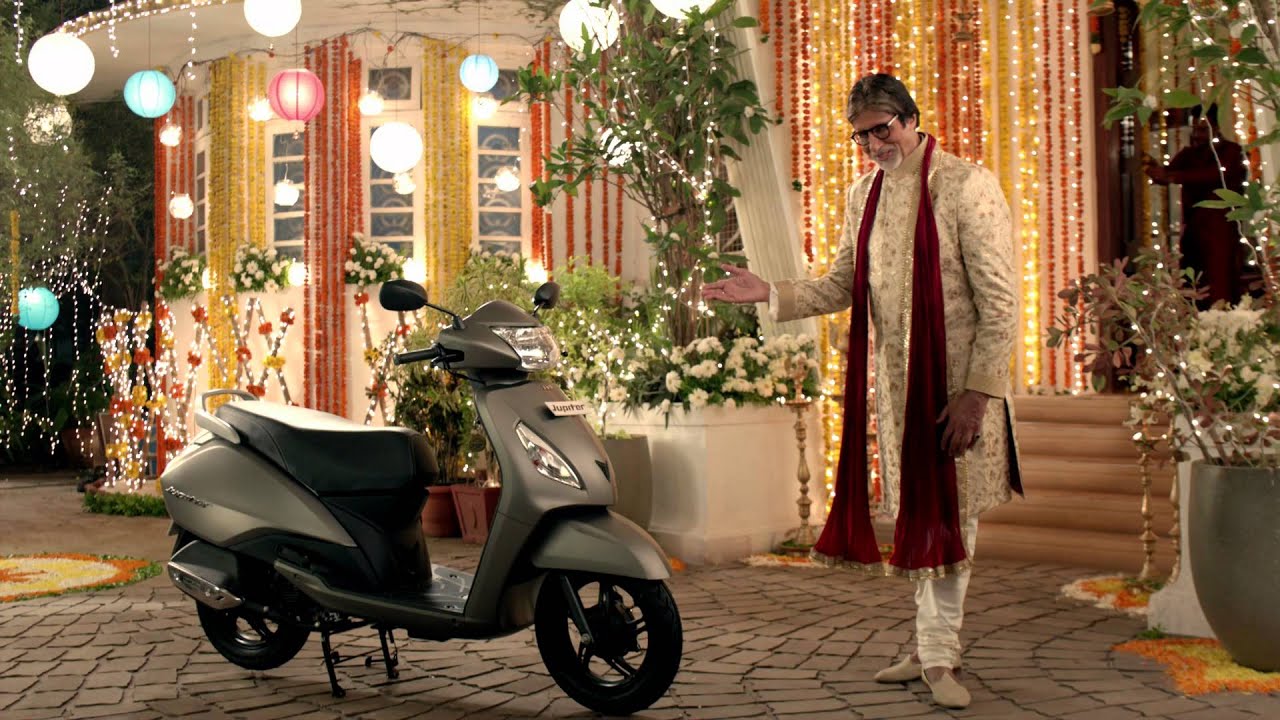
TVS Jupiter launched a campaign with Amitabh Bachchan endorsing the scooter. One of the ads played on the word Jupiter or Brihaspati, which ushers in more prosperity and happiness in the festive season. But the brand category, a middle-class, working-class vehicle, didn’t align with the image of the celebrity endorser. In fact, his superstar image actively mitigates against such everyday appeal. The overall campaign failed to resonate with the audience. Clearly, they couldn’t establish the connection between an everyday product being sold for the masses and the demi-god asking them to buy it.


The Takeaways

Celebrity endorsements are double-edged swords. The risk is that the attention will go to the celebrity rather than the brand. As these examples show, the best collaborations are those where the core values and ethos of the brand align closely with the public perception of the celebrity. That’s when the brand and the celebrity both benefit.


Write to us on info@lokusdesign.com.


7 Brilliant Examples of Moment Marketing
  • August 14 2019|
  • 0 comments |
  • Category : Blog

Amul has been doing it for years. Every time something catches the eye of people in India or the world, the company comes up with its “Utterly Butterly” ads that include brilliant puns that capture the imagination of the audience. These ads are displayed on hoardings, available in the print media, and are widely circulated on social media platforms.

This is what Moment Marketing is all about. It can be roughly defined as identifying key occasions in the wider public consciousness and using the same to deliver the right message to the right audience at the right time.

Social media has become one of the key enablers of this form of marketing because it allows brands to do some real-time, in-moment marketing. Sometimes, this doesn’t even cost a penny, but some quick-witted creatives and presence of mind.

The rise of moment marketing is seen as a refreshing change from other means of marketing on digital platforms and standardized campaigns. Because it takes into consideration the current events, topics that are closely watched by people and some key trends, it finds favour with an audience of potential customers.

In a nutshell, it is all about being a part of the noise, but at the same time, cutting through it and drawing attention to an element that resonates with what the brand represents.

For brands, moment marketing can be the ‘IT’ thing, because these campaigns help:

  • Reach the target audience quickly
  • Gain instant visibility
  • Connect both online and offline audiences
  • Pave the way for authentic audience interactions
  • Align content to the context perfectly
  • Provide brands of all sizes a level-playing field
  • Delight the audience and make the brands memorable
  • Win big with the simplest marketing tools and mechanisms

Here’s how some brands have impressed with their Moment Marketing game!

ixigo

Travel and hotel booking eCommerce website Ixigo rode on the waves of a recent incident, where an Indian family was caught stealing hotel accessories in Bali. Since the topic was something that resonated deeply with the niche they inhabited, the company came up with a brilliant viral video to tell a contrary tale that could help their audience become better travellers. Ixigo’s in-house team created an infomercial called Stuff You Can Take From Hotels, which was a hilarious take on the incident depicting Indian tourists’ behavior overseas.

The video not just made the audience relate to the content and the context, but also educated the masses, hitting two birds with one stone.

Zomato

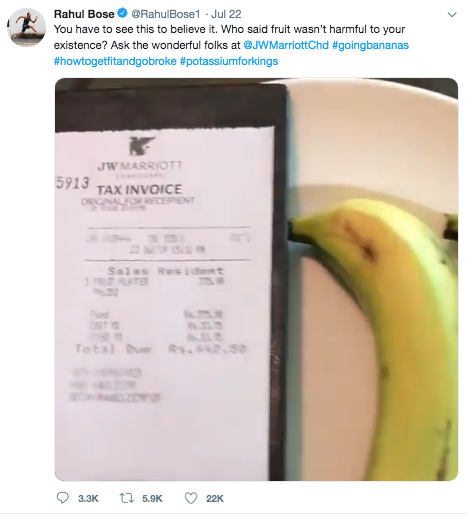
On 22nd July, Actor Rahul Bose shared a video on Twitter to show how a luxury hotel in Chandigarh charged him Rs. 442.50 for two bananas. This led to some of the best moment marketing by brands, including food delivery brand Zomato.

The brand made the most of the opportunity and participated in the #RahulBoseMoment with a creative that said, “You could get a banana milkshake and banana split in less than the amount the 52-year old actor paid for his bananas”.

While this was taking a direct dig at the chain of luxury hotels, the brand also clearly showcased its value proposition of giving customers the convenience of ordering food at affordable prices.

Uber & Ola

Ridesharing app Uber India as a sign of supporting gay pride, incorporated the rainbow colors in its logo and the route map.

This was one of the times when almost all the popular brands showed their solidarity with the cause in some or the other way. Uber’s rival, OLA Cabs also went ahead and did something similar, by changing its ride icon by colouring it in rainbow hues.

Of course, there was an equal number of brands trying to ride the Pride Rainbow opportunistically. But when these ridesharing firms showed their support for LGBTQ rights it seemed natural and organic. An extension of their core function as solutions to make services accessible to a wide swathe of the population without any distinction or discrimination.

Image result for uber lgbtq

Flipkart

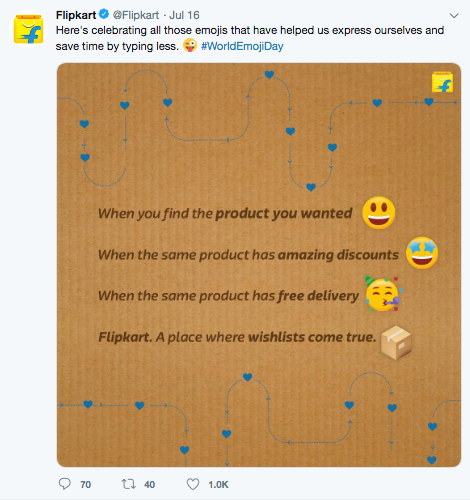
Emojis are pivotal to social media conversation and with July 17th being World Emoji Day, many leading brands jumped on to the Emoji bandwagon. This included eCommerce platform Flipkart, which used a creative to promote the day.

It didn’t just use random emojis to celebrate the day and gain instant visibility but tied it with some of its core product features and benefits. They connected with emojis that spoke of wish lists, a wide range of products, amazing discounts, and free delivery. With this focused approach, it turned the post into a memorable bit of Moment Marketing that drew the audience’s attention.

Fevicol

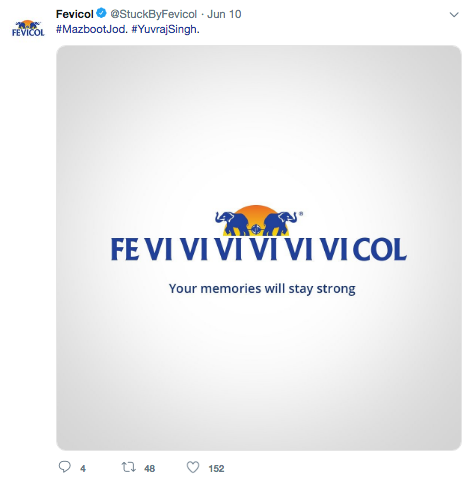
Indian adhesive brand Fevicol has been doing Moment Marketing since before the term existed. From taking a dig at the first-ever blackhole picture shared by Nasa to participating in the #10YearsChallenge, the brand has given us some of the most hilarious and creative campaigns ever.

It took the bat(on) again when Cricketer Yuvraj Singh announced his retirement. What we like about the brand’s take on the moment is that it keeps it simple, yet effective. It never fails to strike a balance between the brand’s core value and the trending topic. For instance, it stuck to its hashtag ‘MazbootJod’ for this campaign, just like its everyday campaigns. Their moment marketing campaigns stick on the memory!

Fastrack & Oreo

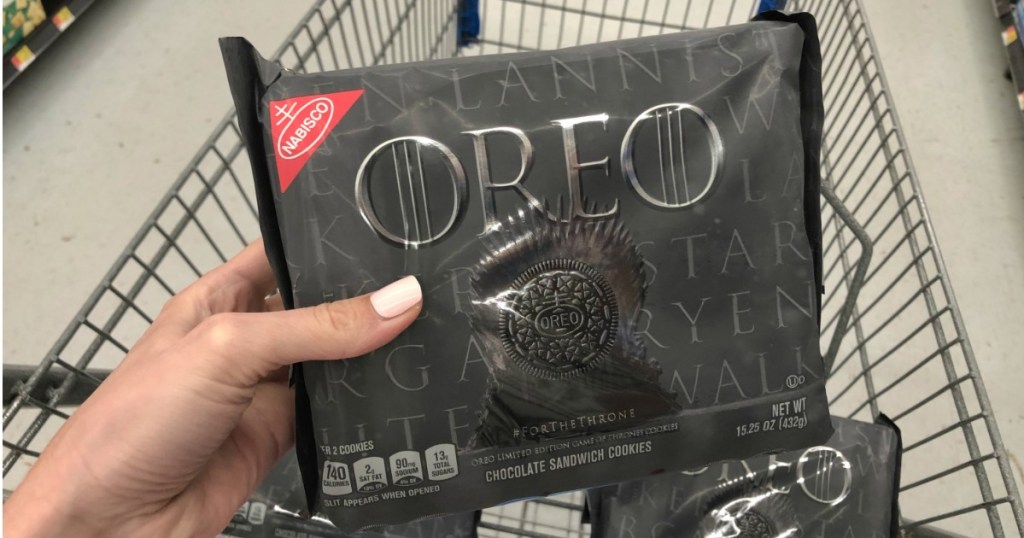
Titan’s Fasttrack took the fastest track to reach out to the fans of popular TV series Game of Thrones by launching merchandise during the show’s final season. The limited Game of Thrones Edition Merchandise was an apt example of how to strike the iron while it was still hot and a great example of how the moment can be mined not only in communications but also in the products themselves.

Also cashing in on the show’s immense popularity was Oreo, which used its product to reconstruct the opening sequence.

Both the brands show that the attraction of a trending topic or event can work wonders. They chose the timeliness, were prepared to embrace the moment and finally, they showed the ace up their sleeves and ultimately, won.

Related image

Paytm

Payment wallet firm PayTM showed the target audience that they can tailor their message perfectly in as few words as possible during Demonetization. Relying on the power of its slogan, it took advantage of the disruptive event to promote the minimization of cash transactions in the country. It was not a generic greeting or a casual campaign, but something that resonated well with the audience at that point of time. In the fewest words, the brand showed that it is there to make life easier for the people affected by the Government’s decision.

Image result for paytm demonetization ad


Tying the Loose Ends

Moment Marketing isn’t a kneejerk marketing reflex. It is now an accepted way to connect with the target audience by using contextual content. By definition opportunistic, the technique works best when the moment means something to the target audience of the brand, the campaign plays into the core ethos of the brand, and the communication is memorable.

Of course, the other part of that equation is that opportunistic campaigns are designed to be fleeting. So, the brands that choose the moment marketing mode will always have to keep their powder dry and their ears to the ground for the next opportunity to present itself. It’s a process of continuous communication.


Write to us on info@lokusdesign.com


5 brands that actually practice their purpose
  • August 06 2019|
  • 0 comments |
  • Category : Blog

If you’ve been in the industry long enough, you know that offering quality products is not enough to establish a connection with your audience. According to Accenture, consumers are no longer making decisions based solely on product selection or price; they’re assessing what a brand says, what it does, and what it stands for.

If you want to build a successful brand, you have to identify, adopt, implement, and practice your purpose such that it encourages your audience to connect with you. That’s what some of today’s most successful brands do. They commit themselves to identify their purpose and ensure it drives every brand decision.

Here are 5 brands that practice their purpose, continuously achieve what they’ve set out to do, and cut through the noise:

Coca Cola

When you think of Coca Cola, what are the two things that come to your mind? Happiness? Refreshing? That’s what Coca Cola’s purpose is all about – refresh the world, inspire happiness, and build a better future. But with consumer needs and preferences about sugar consumption undergoing a transformation of sorts, Coca Cola is constantly evolving to give people what’s “good” for them. Coca Cola is now offering smaller, more convenient packages, introducing new no-sugar drinks, as well as reducing sugar in existing drinks around the world.

There’s a lot Coca Cola is doing to build a better future. Through the World Without Waste campaign, the brand aims to collect and recycle the equivalent of every bottle (or can) they sell globally by 2030. Through the Replenish Initiative, the brand is the first Fortune 500 Company to successfully replenish or return 100 percent of the water they use. And through sustainable agricultural commitments, Coca Cola strives to procure ingredients sustainably, protecting farmers, reducing carbon footprint, and ensuring an energy-efficient, greener future.

Unilever

Global brand Unilever has long been witnessing the tangible value of making purpose a core driver of growth and differentiation. Almost half of the company’s 40 top brands focus on sustainability. Over the years, the brand has committed to improving public health with nutritious foods and brought about a new level of transparency to ingredient sourcing. A growing number of health-conscious consumers are noticing this commitment too.

Take Unilever brand Dove for instance. You might think Dove is just another brand of soap, but in reality, it is much more than that. According to their own research, only 4% of women around the world consider themselves beautiful. Dove recognizes the fact that women, irrespective of their race, battle various levels of low self-esteem. Today, the brand is reaching millions of young women, and delivering self-esteem education so women grow up feeling happy and confident about the way they look. In its way, Dove is showing the world, how to build (and sustain) a brand with purpose!

Starbucks

As profitability gets increasingly linked to a company’s ability to demonstrate they are purpose-driven, Starbucks is one brand that has always shown that it truly abides by its purpose. The brand has always shown itself to be a progressive, forward-thinking brand that aims to inspire and nurture the human spirit – one person, one cup, and one neighborhood at a time.  Today, Starbucks has embraced social issues such as accessible healthcare and education, food donation, competitive wages, and more, to improve people’s lives worldwide. Not because those are popular causes but because they fit into the ethos that Starbucks embodies.

Now imagine when a brand, as powerful as this, faces the ire of the general public because two male customers were subjected to discrimination. Given Starbucks’ commitment to service, the company announced the closure of 8,000 company-owned U.S. stores in one afternoon so that 175,000 employees could undergo training on preventing implicit bias, and work towards the company’s founding values that are based on humanity and inclusion. Can you find a more purpose-driven brand than this?

Walt Disney

Another brand that’s been successfully practicing its purpose is Walt Disney. You might think that driving revenue might be an easy task for Disney, but there’s a lot the brand does other than use Mickey Mouse headgear to keep customers happy. The brand has been entertaining and inspiring people around the globe through unparalleled storytelling for almost a century now! The company has been working towards making even the most mundane tasks exciting and fueling customer happiness and satisfaction in unexpected ways.

From Disney-themed hotels and shops to immersive storytelling through simulated environments, smart apps, to innovative ideas that make queuing up for tickets and waiting to board rides an exciting endeavor; the ways in which Disney drives happiness are innumerable. Surely, Disney is doing all it can to deliver on its core promise – the promise to create happiness through magical experiences. It truly is the “Happiest place on earth.”

Toyota

In the age of sustainable living, Toyota is one brand that is truly making a difference. Working diligently on the promise of producing reliable vehicles, the brand has been driving efforts in the sustainable development of society through innovation, shaping the future of mobility, and enriching lives around the world in the most responsible manner. Toyota’s commitment to quality, durability, and reliability has been a beacon for companies big and small. Through their kaizen principle, they have been driving results and challenging themselves to do better – every day.

Take a look at how they’ve continuously been moving beyond designing cars and driving innovation through several other initiatives. The KINTO car subscription service looks to enable people to utilize a variety of vehicles for an unlimited period. Driving innovation by leveraging AI will see the brand offer delivery services, portable medical treatment, on-demand vehicles, as well as autonomous delivery services shortly. And the Mobility for All campaign aims to completely reinvent the ability of paraplegics to move. Truly, a brand that is living its purpose!

So, are you embodying your brand purpose?


Write to us on info@lokusdesign.com.


Retail space design failures and what they teach us
  • July 17 2019|
  • 0 comments |
  • Category : Blog

So, you have spent time and money in establishing a meaningful retail brand. You stand apart because of who you are and what you represent as a retail experience. But is that enough? Once the folks you are talking to enter your store what will keep them from buying? It’s worth looking at the nitty gritty of the in-store experience to answer that question.

As a retailer, you might know the importance of offering quality products and quick service to your customers. But do you realize how important good retail space design is to the success of your business? Those that think they can cut corners on retail space design, skimp on lighting fixtures, or product placements, are in for a rude shock!

The possibilities for retail space design failure are many, and we’ll show you exactly how retail space design failure can impact your bottom line.

Messy shelves

If you think you’ve achieved success by getting customers into your store, think again. Getting them in is actually the easy part; helping them buy is a different ballgame altogether. And it’s not going to work in your favor if your retail display looks like this:

UntitledThis image is from a JC Penny store; it’s not surprising why they suffered a 5.5% decrease in first-quarter sales for 2019, and why they’re closing over 27 of their stores this year. Having far too much merchandise can frustrate your customers. Have you imagined what happens when a customer manages to knock a few hangers onto the floor? Optimizing the amount of merchandise is a logical thing to do. You can either move it to another location or put it in your inventory room. Systematically organizing your products can make shopping a pleasant experience and that will bring your customers back to your store again and again.

Lackluster display

When customers enter your retail store, they expect to find products displayed in an attractive manner on your shelves. But how can you expect to drive sales, when your shelves look like this?

UntitledAfter decades of successful business, Walmart is gradually closing many of its brick and mortar stores. Having empty shelves or displaying products in a cluttered manner can drive your customers away. If the products do not look good in the store, they can never look good on your customers! If you want to engage customers and help them easily find what they’re looking for, vary the visual elements. Add colour and depth to your displays, and showcase products on different levels. Create adequate visual drama and excitement to keep customers engaged.

Excessive stock

Despite the growth of online shopping, there are thousands of customers who still prefer visiting a retail store to physically see and feel products, try them on, understand their features and just to enjoy the whole retail experience. But, unless you are a warehouse, how can you provide a fulfilling retail experience if your store looks like a warehouse?

UntitledDespite being around for over 70 years, Toys R Us filed for bankruptcy in 2017 – although after having re-strategized their business and having worked through their flaws, the company is back in business. What Toys R Us taught is, is that a retail store needs to display products in a manner that is pleasing to the eye and offers customers an experience that is gratifying. If you have too much stocked up – in boxes that too – it’s a turn off for customers. If you have excess inventory, move them to your inventory room, or just place them in a corner and offer them at reduced prices.

Unending queues

Everyone is living busy lives. Yet, customers take out time for their hectic schedules to drop by your store and purchase products to fulfill their needs. But if your POS counter has a queue as long as this, how do you expect your customers to come back to your store again?

UntitledAfter having been in business for close to two centuries, Sears filed for bankruptcy in 2018 and closed 142 of its stores last year. Offering a pleasing in-store experience is critical to have customers coming back to your store. While having a big queue like this is a sign that you’re doing good sales, it is important you minimize the checkout time. Put up more POS stations at peak hours, install self-service kiosks, and move complex billing to a different counter altogether.

Shoddy interiors

A retail store is supposed to offer an experience that is fulfilling, exciting, and enjoyable at the same time. However, if a retail space looks like this, you can be sure to experience a sudden slump in your footfall:

UntitledDespite being one of the most innovative retail companies, Kmart’s future is anything but certain. The company has already filed for bankruptcy and is looking for ways to retain its foothold and employees. What Kmart teaches us is that retail spaces are supposed to be modern, clean, and certainly not wrecked. Frequent inspection of fittings, fixtures, shelves, walls, and floors is vital, and any damage should be immediately repaired. Make your customers feel they’re valued and offer them an experience that is pleasant and enjoyable.

Your retail store is a unique entity. It is the embodiment of your offering, your place of business, and the physical representation of everything that your brand stands for. If your retail store suffers from any of these design failures, then there’s a fair chance that it’s not just the immediate shopping experience that will be negatively impacted. The greater concern should be the risk you run of your brand appearing inauthentic and incompatible with the values you claim to espouse. Once that happens, it’s a long road back to gaining the trust of your target audience again.


Write to us on info@lokusdesign.com


‹ Prev1234567Next ›Last »
© 2018 Lokus Design Pvt. Ltd. All Rights Reserved.