• Home
  • About
  • Transformation Stories
  • Contact Us
  • Blog
    • Blog
    • Perspectives
  • Home
  • About
  • Transformation Stories
  • Contact Us
  • Blog
    • Blog
    • Perspectives
Money Matters – Budget 2018
  • February 07 2018|
  • 0 comments |
  • Category : Perspectives

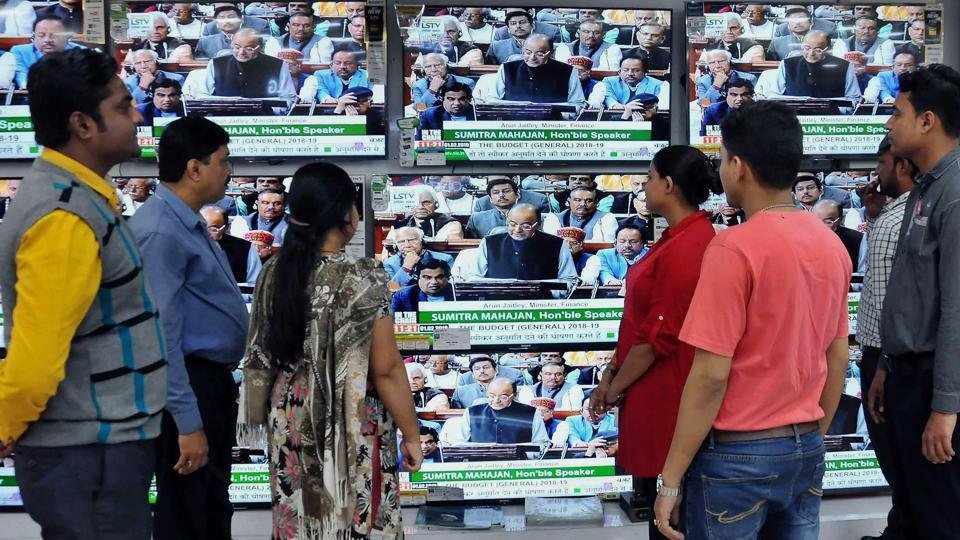
union-budget-2018-19_6107bbf8-073d-11e8-8132-ce8c29606b52Not many would accuse economists of being entertaining but there is one annual economic exercise that grabs the collective attention of India and Indians like no other- the Annual Budget. Feverish pre-budget speculation spills over from the economic papers into the mainstream media. On the airwaves, unwary passers-by and otherwise silenced homemakers are forced into making economic pronouncements on their expectations from the nation’s budget. Post-budget evaluations present an existential paradox as the effort gets both lauded as path-breaking and derided as ill-considered. Why do the people care so much about a fundamentally mundane accounting exercise?

The government’s revenues come from a complex basket comprising multiple sources but what each citizen sees first hand is the taxes being drawn from their pockets. The very complexity of the basket makes virtually all the other sources invisible to them. Having contributed, what they think is the lion’s share, to the government’s coffers they believe they have the right to ask for an accounting. And perhaps more importantly, they feel entitled to benefit directly from their contribution. In a nutshell, the people may be seeing answers to two fundamental questions. What are you doing with “MY” money? And, what will “I” get out of it? It’s up to the government of the day to provide the answers.


“Purpose” Is Back In Positioning And We Love It!
  • January 30 2018|
  • 0 comments |
  • Category : Blog

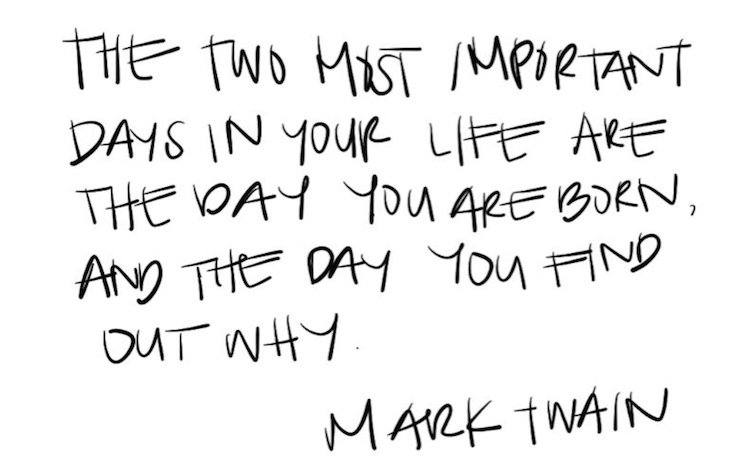
life-purposeGreat brands have one thing in common- they are all driven by a Purpose of creating and delivering value in the lives of people. Successful brands always seem to be a step ahead of their competitors – whether it is to anticipate what the market needs and delivering it impeccably time after time. In fact, in many ways, it seems they don’t even care about the competition and they forge their own path. The question then is, how do these brands manage to stay ahead of the game? How are they able to craft enduring relationships with their customers that seem to stand the test of time? How do they carve out a niche market that seems to exist solely for them?

Over the course of building a brand, organizations often get trapped in the vicious vortex of Entropy – the chaos of competitive frenzy that exhausts them and distracts them from their own Positive Valance. They focus on being market leaders by incessantly responding to what the competition is doing. This Entropy-fuelled race shifts the focus on lofty marketing strategies without first defining the Brand Purpose. Without a sense of Purpose, a Brand essentially is nothing… almost like a rudderless ship in stormy waters waiting for deliverance. In such cases, the focus is forever shifting… what the market says, why was our social media campaign less popular than the competitors, how to make out packaging look more “with it” to attract the young audience that seems to be more attracted to that other brand… the list goes on. Driven by a constant need for external validation, such Brands always look outwards to follow what others are doing. As a result, they emerge as mere copycats. In a world that is gradually being consumed by imitators, standing out demands courage… and an inherent sense of Purpose.

Purpose also becomes the hero in the story of Brand Positioning. While the importance of Brand Positioning cannot be denied in the life story of a Brand, addressing this important marketing milestone without defining the Brand’s inherent Purpose is almost counterproductive. Without Purpose, Positioning initiatives are like a merry-go-round shifting messages, target segments, and donning Personalities – none of them truly authentic.

Brands that have managed to stay relevant in today’s hyper-competitive market have retained a strong sense of Purpose. They have identified the zeitgeist of today’s economy and have successfully crafted their response on the foundation of ‘why’ they really exist. Do you think companies like Apple, Airbnb or Virgin, for example, could survive in this world and be as successful as they are today had they not found their Purpose? Would they have been successful had their Purpose been to simply be better than their competitors?

While the Purpose, Proposition, and Positioning of a brand are equally important, it seems that Purpose is often a victim of the Cinderella complex – treated like the unworthy stepsister. Unless a Brand has a clear sense of Purpose that comes from a genuine insight into their own core strengths and Values, on what will they base their strategies and transform their businesses? Steve Jobs could manage to make Apple a Brand that the world lusted after only because he had a Vision that was driven by a strong sense of Purpose of always challenging the status quo through products that are beautifully designed and easy to use.

A research conducted by Deloitte showed the mounting evidence on the importance of Brands aligning to a Purpose. According to their survey, ‘Purpose’ trumps ‘Profits’ since Purpose builds confidence in long term growth. The report also shows that 82% of the employees were more confident that their organization would be more successful and grow faster if it was fuelled with a strong sense of Purpose. Almost 91% of the respondents believed that a strong sense of Purpose would help an organization to not only build loyalty but also strengthen it for the foreseeable future. A strong sense of Purpose also leads to the commitment of delivering top quality products and services. It fuels long-term, sustainable growth. All of this helps in Brand building activities in an organic manner.

A study published in Harvard Business Review also builds the case for having a ‘Purpose’ in today’s context. According to this report, Purpose brings meaning to a company that goes beyond shareholder value. “Purpose-driven companies make more money, have more engaged employees and more loyal customers, and are even better at innovation and transformational change.”

Purpose actually helps organizations discover their Identity. When a strong sense of Purpose is etched in the fabric of an organization, all strategies, be it that of marketing a product or that of innovation, have a direction to follow. Growth in such an environment becomes an organic and natural consequence of the focus that comes from identifying Positive Valance.

Dr. Seuss said, “Today you are You, that is truer than true. There is no one alive who is Youer than You.” Unless you are the real you, how can you bond with your genuine customer base and create a Brand that delivers value to their lives? Without a sense Purpose, then, how can you Position a Brand correctly in the hearts and the minds of your customers?


For more on this, write to us at info@lokusdesign.com.


The Public and the Republic Day
  • January 30 2018|
  • 0 comments |
  • Category : Perspectives

maxresdefaultThe magnificence of the Indian Air Force’s aerial displays, the awe-inspiring weapons systems on display, the competitive grandeur of the floats from the states, and the poignancy of seeing the families of the winners of the medals of valour –what would Republic Day be without those references? Everything about our Republic Day, right up to the uber-synchronised Beating Retreat is designed to impress and inspire the citizens. In comparison, Independence Day seems to be a much more functional, almost austere observance –why the difference?

Independence Day is an uncomplicated celebration of freedom – of becoming free from an oppression that, despite the 70 years that have passed, is still very personal to most Indians as we go about savouring that freedom in our everyday lives. The Republic Day challenge is how to get the people as excited or involved with the acceptance of a document, even if it is the very foundation of what makes India the nation it is? The citizens may choose to be less than excited about the workings of the government but the Republic Day displays offer stunning visual proof of what the country has achieved – a kind of report card of the country if you will. Could the purpose of all the ceremony be to join the citizens with the celebrations? Could the pageantry be an invitation to the people to become a part of the celebrations, to draw confidence from the display of our greatness as a nation? Could this be the public in the Republic Day?


Hearing The Voice Of Reason In The Social Echo Chamber
  • January 22 2018|
  • 0 comments |
  • Category : Perspectives

organiz01On social media, do you “like” what you hear? Or could it be that you hear what you “like”? The online world in general, and social media, in particular, has become a system that seems to exist to sustain its own opinions – an echo chamber of sorts where one hears exactly what one is looking to hear. This is by design, not by accident – the business model of these megabrands demands that they serve users what is more likely to make then spend more time on the site. What is popular is believed to be true, and with enough money and effort, anything can become popular. So, is it all doom and gloom on the social front?

Facebook’s new update may be the ray of hope the online world is looking for. In many ways, the allegations of “fake news” and manipulative content seem to hurt Facebook more than it does most. This is a network that claims to give people the power to build communities to bring the world closer together. Going by the public pronouncements of Mark Zuckerberg about the new update, Facebook seems to be stepping away from what is “relevant” to their users to what is “meaningful” to them. They acknowledge that this will make users spend less time on the site – but that the time they do spend will mean much more.  This is a radical thought but clearly aligned with the values the brand stands for. Zuckerberg says, “we can help make sure that Facebook is time well spent.” – and that is clearly the voice of reason.


The Museum: Emerging narratives in contemporary India
  • January 20 2018|
  • 0 comments |
  • Category : Blog

Untitled-min

In the 20 years after liberalization, we are noticing an emerging trend in the establishment of history museums throughout India. Here, we will discuss our observations, explorations, and understanding of both, the contemporary context of India and our specific negotiation of this context in the making of history museums.

Postcolonial India, as with every other colony in the 40s and 50s, embarked on a journey of self-discovery. New identities were forged, newer missions were planned, and even newer voices were heard. Some radical, some ethnic, some religious, some conservative, some liberal, some secular, some regional, some idealistic. The early leaders of Independent India founded the country on a socialist political ideal. And in an attempt to unify a vastly diverse subcontinent were staunchly secular and nationalistic. As a result, the emerging voices of regional, religious, local subjects were subsumed in the meta-narrative of the secular nation.

We grew up in a different generation of Independent India which was surprisingly still grappling with its identity after 35 years of independence. The economic liberalization (in India in the late 90s) put the country on a different path, opening it up to the world in trade & commerce, and brought a wave of globalization. So came travel, exposure, knowledge and interestingly, though slowly, brought out the latent need of going back to the roots.

Since all the old government institutions in India like Museums, Educational institutes and even the Archaeological Survey of India were established by the British, our view of our history has been through the eyes of the colonial powers. The story of our civilization has been preserved largely through a tradition of oral histories. Very little of our history is documented in any other form. Most of it being destroyed/renewed by waves of invasions and amalgamations which have resulted in the melting pot of cultures and identities that India is today.

It is now, in post-liberalization India, where more than 50% of its 1.3 billion people are below the age of 25, that we are seeing an emerging need for new narratives through which young India is trying to re-discover and define its identity. There is a renewal of interest in local histories and an effort to preserve area specific cultural identities. This is leading to a rediscovery of museums as a mode of communicating these aspirations and interests.

As we are in a mode of assimilation and cannot discount anyone’s contribution to the making of who we are today, the museum now has the challenging task of not only communicating a common history but histories with shifting perspectives.

The sheer complexity & interweave of subjects on a backdrop of improving economic conditions, levels of education and exposure to technology are dictating a changing museum format. The new format needs to be more engaging, interactive and caters to the masses, not just the elite and importantly addresses shrinking attention spans.

At Lokusdesign, we are trying to create hybrid formats for communicating history by sympathetically binding traditional storytelling methods with modern technology. For example, storytelling through folk performances complemented by holographic projections/3D mapping technologies or bringing in elements from our collective memory into an emotive space. Therefore making them relevant and engaging in the current context.

Going forward we have a big responsibility of binding the living and the past and bringing all into a dynamic space in a neutral and constructive manner, in a restless and buoyant nation that is in the throes of redefining itself.


For more on this, write to us at info@lokusdesign.com.


What Role Can Brands Play In The Lives of their Consumers?
  • January 20 2018|
  • 0 comments |
  • Category : Blog

1e62e70-1080x675

We, marketers, are consumers too. So, we can appreciate just how much consumers are bombarded with brands, every minute of every day. It seems that everything around them was created by a brand. All of the products and services that they avail were made possible by brands. Even the device that you’re reading this article on is branded!

But there are always some brands that we hold dearer than others. Speak to your grandparents and they will talk passionately of the hair oil or soap or milk brands they have been using for decades; but maybe not so much of the mobile phone brand they use. And it is not that the mobile phone brand has offered a bad product. So why would this happen?

Research suggests that people don’t buy brands just because they like them or they work well. People build relationships with a set of brands so as to benefit from the meaning they and their products add to their lives. These meanings could be more functional and utilitarian, or even psychosocial and emotional.

According to a recent study undertaken by Havas Media, 75% of the Indians believe that brands should play a role in improving our quality of life and wellbeing (with the Asia Pacific average being 69% and the globally average 67%). The same study also reveals that such meaningful brands can on average gain 46% more Share of Wallet than the less meaningful ones.

So what is this meaning that we are talking about? What role could brands play in the lives of their consumers?

Traditionally, brands were supposed to help buyers identify and differentiate the products of one seller from those of others. Furthermore, they used to be an assurance of a certain level of quality and consistency. But today, brands are not limited to the products they offer.

Strong brands are often a strong reflection of their consumers’ values and belief systems- and by extension, their Culture.

A few years ago Nike built a decent skateboarding shoe that was certainly as well-made as an Etnies skateboarding shoe. Yet the hardcore skater wouldn’t be caught dead in Nikes. Why? Because, in the rebel world of skaters, Nike stood for “The Man”. The Etnies founder is a famous skater who lives and breathes skater culture. Nike doesn’t come from that world. Nike didn’t embody the beliefs of skater culture. And a pair of Nikes would have sent a conflicting message to the skater’s friends—if he dared wear them to the skate park. Nike had the wrong meaning—a few years ago.

Then Nike launched a new line of skater shoes, called Nike SB essentially Nike’s renewed attempt to break into the skate market. But this time they somehow got it right. They hired the right people with the right street cred and deep understanding of skater culture. They plucked these people from the “legit” skater brands and put them to work creating an internal culture that aligned with their audience, and they created a series of shoes that finally undermined the “corporate” image and quietly grew the Nike SB brand.

Then, they launched their 6.0 line of shoes designed for the multi-action sports audience (skate, snow, surf). Some shoes were issued in small, limited editions, and this put Nike over the top. As of today, Nike offers the hottest shoes in the skate and action sports category. They didn’t pull this off with a classic TV and print campaign. They started from within, built a legitimate skater culture, built the right shoes, built the right team of riders, sold only to the small core shops, and built a culture that core skaters wanted to belong to. And it worked!

Let’s take a case closer home. Some 70 years ago in a small town in Gujarat, unfair and manipulative practices followed by the local trade cartel prompted the farmers to get rid of the middlemen and form their own co-operative which would have procurement, processing, and marketing under their control. This co-operative, the Kaira District Co-operative Milk Producers Union Ltd. began with just two village dairy co-operative societies and 247 liters of milk and is today better known as Amul.

The brand has empowered millions of farmers across India and safeguarded their dignity. At the same time, it consistently provided wholesome nutrition to all classes of the society at the most affordable prices. It paved the way for White Revolution way back in the 70s, which not only spurred the rural economy but also made India the largest producer of milk globally. Amul is also credited with a Guinness world record for the longest-running ad campaign of the world for its Utterly Butterly girl portraying day-to-day issues of India since 1967. In 1977, the Amul story was showcased through a Hindi movie titled Manthan. The movie, again demonstrated the power of collaboration as the movie was financed by a contribution of Rs. 2 by 5 lakh farmers. There is little doubt that Amul IS truly, ‘The taste of India’.

More and more brands need to invest in creating seamless experiences to connect with their audiences on a deeper level. And this is not only because of the definite returns it yields in terms of loyalty and advocacy, it is also because their customers expect no less. In an era when 60% of content created by brands is just clutter- having little or no impact on the business results or the lives of people- it is imperative that brands see their role in the lives of their customers as more than just trademarks.


For more on this, write to us at info@lokusdesign.com.


The Copy-Cat Chronicles – 5 Brands That Chose to Follow and Fail
  • January 16 2018|
  • 0 comments |
  • Category : Blog

facebook-copycat-130613

“It is better to fail in originality than to succeed in imitation.” Herman Melville

Commercial businesses implement competitive benchmarking exercises in a bid to measure business performance vis-à-vis market competitors. This practice usually defines a set of metrics as the evaluation criterion and seeks to make comparisons. Brands are also sometimes fond of referring to competitive strategy that has proven successful. The danger is when this goes beyond benchmarking and turns, almost unnoticed, into imitating that strategy. This is dangerous because what works in one organization, will almost certainly, not work in another. The situations and circumstances of each organization are different and, most importantly, their essence and core values are completely different. We have said often how we believe that the branding, and indeed organizational, strategies would be much more relevant if they are built on the inherent positive valence.

Let’s take a look at some instances wherein an excessive focus on imitating competition failed.

  1. Vanilla Coke

Vanilla ice cream remains a favorite inter-generational choice of frozen dessert for millions of Indian consumers. The trend persists and this flavor holds its own even in the highly diversified desserts market in India where major brands bring new flavors and formats every year. Coca-Cola worked on a vanilla flavor for its mass-market products and launched Vanilla Coke. However, the project floundered and the product was withdrawn from the market. Consumers did not know quite what to make of the product. The vanilla flavored drink tried hard to be both a much-loved cola, and an equally much-loved ice-cream but ended up being a wannabe ice-cream float. The Indian consumer did not seem amenable to choosing a pale imitation when any number of originals were available.

  1. Maruti Versa

Maruti Suzuki’s launch of the Versa, a family van, promised much but stopped short when it mattered. The product sought to extend the bloodline of the Maruti Omni van by encroaching into the territory of a true international icon, the Volkswagen Type 2 (or the Transporter). The product was visibly larger than the Omni and, in a nod to the perceived aspirational value, was priced at close to the sedans of the day.

The boxy shape of the Versa and a high (perceived) price point failed to meet the expectations of consumers. The lines of the vehicle were less than perfect and this added to the negative market reaction. Maruti’s rivals were offering impressive vehicle designs and wider options to consumers at similar price points. This ‘multi-purpose vehicle’, which was not quite a VW, rapidly lost ground in the Indian market.

  1. Blackberry Storm

Blackberry was a major consumer telecommunications hardware manufacturer in the first decade of this century. Research in Motion, the firm that made the Blackberry devices, was famous for its high-quality consumer products and its failsafe software security protocols. Following the launch of the Apple iPhone in 2007, Blackberry attempted to launch the Blackberry Storm as a phone that was just as smart. However, as InfoWeek opined, “BlackBerry’s inability to react effectively to market changes, specifically the first iPhone and AT&T’s deal with Apple, doomed the famed smartphone maker.” Imperfect software and other developmental flaws showed up starkly when compared to Apple’s challenger. Blackberry’s famed market share eroded, and sales declined as the markets and customers eagerly switched to Apple’s first iPhone device. Clearly, Blackberry’s defensive play against Apple had failed and this proved to be a harbinger for the Canadian device maker’s eventual downfall.

  1. Maggi Dal Atta Noodles

Maggi is THE staple brand in the Indian market for instant noodles. The brand’s range of products has generally been well-received, but the Dal Atta variant failed in the Indian market. Nestlé, the manufacturer of Maggi noodles, wanted to offer a ‘healthy’ quick snack to try and cash into a visible shift in the Indian consumers’ mindset to healthy snacking options. This presented a perception challenge for the brand as well as the Indian consumer. A brand that had more or less created the product category of fun foods that were meant for instant consumption, not deep reflection, was now trying to associate itself with a movement driven by good sense and reason. Perhaps not surprisingly, the product failed the taste test with the Indian consumers and registered very low uptake in major Indian cities.

  1. TATA Nano

The Nano envisioned as an uber-affordable small car, targeted the Indian middle-class buyers. TATA designed the project to take on Maruti Suzuki’s domination in the large-volume, small car segment in a huge market like India. While driven by an extremely high innovation element, the product seemed to want to be everything that Maruti’s iconic 800 was, except smaller and cheaper. Tata Motor’s seemed to be targeting a seemingly vast Indian middle-class that may have aspired to buy the Maruti 800 but could not afford it. However, the Nano failed the expectations of the targeted consumer segment. Its engine proved less than optimized to client expectations, and the vehicle acquired an unfortunate image of being unsafe on Indian roads. In addition, the “cheap car” stigma and the less-than-inspired visual styling of the TATA Nano seriously damaged the market prospects of the automobile. In a very real sense, the Nano was always less than what it tried to be.

The above chronicles narrate a tale of Entropy arising from being swept up in the chaos of the marketplace and excessively referencing competitors. In the end, it’s always better to believe in your Positive Valence- what makes you, your company, and your brand unique. For sure there will be less competition while doing that!


For more on this, write to us at info@lokusdesign.com.


The Feeling is Electric – The Havells story, and our part in it!
  • January 15 2018|
  • 0 comments |
  • Category : Perspectives

If you haven’t already ordered it then go ahead and pick up “Havells: The untold story of Qimat Rai Gupta”.

Havells acknowledgement-07-min


The business of Entropy
  • January 05 2018|
  • 0 comments |
  • Category : Perspectives

family father mother daughter dispute screaming silhouette

Are you angry? In fact, do you remember when you were last, not angry? Doesn’t it seem like everywhere you look there is evidence of the very things that outrage you? The news is full of shouting heads and social media has so many people sharing so many articles that confirm all your worst suspicions –whatever those suspicions may be. It only serves to add to the Entropy- the chaos and disorder- that we, as individuals, organizations, and brands are perpetually consumed by. And that’s where the rub lies.

There’s no denying that life is hard for everyone. Most people are involved in a daily struggle and every day, they confront a sense of barely being in control of their own situation. In some ways “worrying” about more distant things – that movie, that historical slight – is a welcome distraction from the challenges of the here and now. The truth is media companies and brands know that too. Their all-knowing algorithms know that outraged, high Entropy viewers are more likely to “engage” with their content than placid or peaceful viewers. It is in the interest of these megabrands to serve that Entropy, and indeed to feed it.

But doesn’t this also present an opportunity for a brand to reduce the Entropy in the system? In a sea of negativity – if you represent a ray of hope isn’t that a wonderful way to shine out? Most brands see themselves as being good and positive – if that is so, isn’t it time for them to disperse all the doom and gloom with their own Positive Valence? It’s time to get out of the business of Entropy!


Hello 2018!
  • January 02 2018|
  • 0 comments |
  • Category : Perspectives

Human Silhouette With Energy Radiating From Heart Chakra, Eps 10 Vector, Transparency and Gradient mesh Used

Where do we report a missing month or two? 2017 seems to have been shorter than one would expect, right? Did it feel like the year just whizzed past? Did you get a chance to execute all that you had planned for your brand when the year started? Or did you get sidetracked? If you’re like most brands (and brand managers) then it’s likely you’re nodding along. But is it time to think why?

Consider, were your actions driven by external factors? Was it you, or your competition, or the much-maligned market that made you do the things you ended up doing? Were you consumed by the chaos surrounding you, the entropy in the system? If so here’s a suggestion. Make your 2018 New Year resolution to focus inwards, not outwards. Take a conscious step back from the confusion and look inside. Identify what makes your brand tick, what are the core values you represent, who you are, and to whom. Then base all your actions on that Core. Look to communicate that effectively to the audience that shares those values. Do that, and possibly when you end 2018, you will be able to look back at a less reactive, more planned year gone by.

Happy New Year!


« First‹ Prev101112131415Next ›
© 2018 Lokus Design Pvt. Ltd. All Rights Reserved.