• Home
  • About
  • Transformation Stories
  • Contact Us
  • Blog
    • Blog
    • Perspectives
  • Home
  • About
  • Transformation Stories
  • Contact Us
  • Blog
    • Blog
    • Perspectives
Your Brand has a personality too! And it matters.
  • March 29 2018|
  • 0 comments |
  • Category : Blog

Screen Shot 2018-03-29 at 7.06.22 PM

When you think of Nike, you would visualize someone athletic and sporty. When you think of Rolls Royce, you would visualize someone regal and crèam de la crème. Johnson & Johnson comes across as kind, compassionate, and caring – a brand people trust, a brand people would like to associate themselves with. Harley Davidson comes across as strong, tough, and dynamic – a brand people find awe-inspiring, a brand people would like to hold onto.

What kind of a person comes to your mind when you think of your brand? And frankly, does this even matter?

Brand’s Personality is the set of key characteristics or traits that your Brand would display if it were a human. As such, it defines how your brand speaks and behaves – either through individuals representing your brand, or through your advertisements, or your packaging. And this is of critical importance- according to a study, 45% of a brand’s image in the minds of its consumer is attributed to what it says and how it says it.

A brand personality that resonates is sure to enhance brand equity for it offers a consistent set of traits that consumers can align with their own value systems. Brand personality can help in:

  • Portraying your image as a brand
  • Communicating positive traits about your brand
  • Forming an emotional connection with consumers
  • Differentiating your brand from competition
  • Building long-standing relationships with consumers

Brands with a strong and truthful personality are easier to remember and identify. A strong personality that matches the brand experience and the shared values engender loyalty towards the brand and increased trust.

Types of Brand Personality

Given the importance of your Brand’s Personality, we need to have a tool for measurement of it. One of the most often used instrument in this regard was developed by Jennifer Aaker way back in 1997 in her research on “Dimensions of Brand Personality”. She constructed a five-dimensional framework for describing and measuring the “personality” of a given brand, each dimension being divided into a set of facets.

  1. Excitement – carefree, spirited, youthful (think of Fanta)
  2. Sincerity – down-to earth, hardworking, thoughtful (think of Amul)
  3. Ruggedness – outdoor, tough, athletic (think of Thums Up)
  4. Competence – successful, influential, accomplished (think of GE)
  5. Sophistication – luxury, elegant, prestigious (think of Rolex)

Craft your Own

Carefully and accurately defining your personality is important for your brand to resonate with the right consumers. By reflecting the correct attitude and choosing an apt personality you can occupy a place that is unique in the market. Is your brand bold or is it witty? Is it conservative or is it intellectual? Is it glamorous or is it mysterious? Is it dependable or is it youthful? Here are some tips:

  • If your brand comes across as friendly, showcase the friendly relationships your share with your employees, suppliers, and consumers.
  • If your brand comes across as sincere, offer a sneak-peak into your production process and show them how hardworking you are in creating an honest product.
  • If your brand comes across as rugged, highlight your employees’ adventures and portray your daring self.
  • If your brand comes across as reliable, share facts about the equipment you use or the standards you adhere to.
  • If your brand comes across as sophisticated, pair your product with places and people that consumers see as aspirational.

It all depends on your inherent personality. Focus on the traits and qualities that make you “you”. Then, find a creative way of engaging with your consumers, make a strong and personal connection and achieve brand equity.


For more on this, write to us at info@lokusdesign.com.

Is your Brand felt by those who work for it?
  • March 29 2018|
  • 0 comments |
  • Category : Blog

Screen Shot 2018-03-29 at 6.42.51 PM

In an extremely competitive market, brands are trying exceptionally hard for distinction, relevance, and growth. Every brand more or less knows what it wants to do, some brands also know how to do it but only the truly successful brands know why! You might be selling a range of home appliances, but do you know why you’re selling them? Is it just to make money, or is there a clear purpose driving your brand?

A brand should exist not just to make money, but to project and reflect the positive difference it can make in people’s lives. It is the clarity and simplicity of your brand’s purpose that drives all other brand attributes. It is also this purpose that is the basis for an enduring relationship with the consumer. Companies with a clear brand purpose can transform and innovate better. Employees aligned with this purpose are happier, perform better, and represent the brand more consistently. And when your people have a greater sense of purpose, profit will inevitably follow.

Brands with Purpose

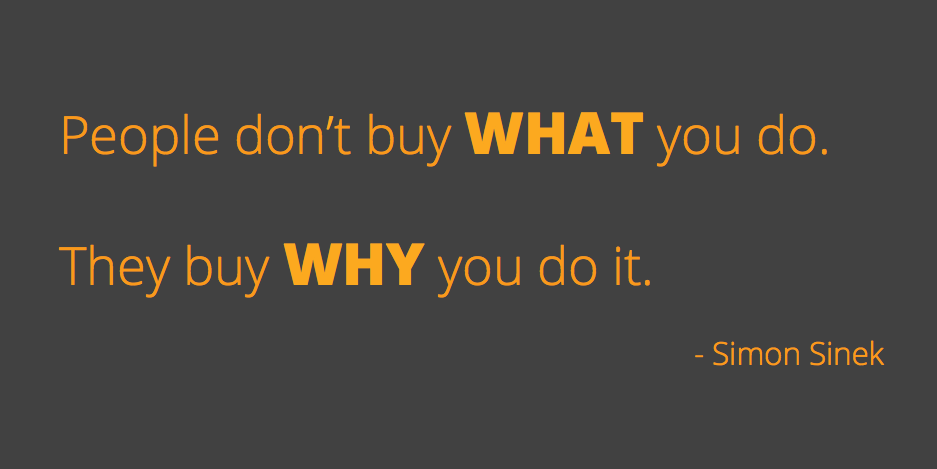
As British author Simon Sinek says “Knowing ‘why’ your company or brand exists provides the foundation on which to build everything else — your ‘how’ (organizational culture, brand experience) and your ‘what’ (products or services you offer)”. Let’s look at car major Tesla. In a world where non-renewable sources of energy are fast depleting, Tesla is making the giant transition to sustainable energy. ‘What’ do they do? They build a range of electric vehicles. ‘How’ do they do it? They create a culture of technology, design, and innovation fueled by the drive to move away from polluting and depleting fossil fuels. ‘Why’ do they do it? To accelerate the transition to sustainable transport, Tesla builds the next generation of electric cars using integrated energy solutions. People who work for Tesla share the same purpose as the brand – to combat climate change and bring about a clean energy revolution.

Sports apparel company Nike has a strong brand purpose as well. By bringing inspiration and innovation to every athlete in the world, it reflects the positive difference it can make in people’s lives. Nike connects with individuals universally and moves away from the fitness world to everyday life. Nike is not just creating products for the athlete but is committed to building deeper community connections and encouraging positive social change around the world. ‘What’ do they do? They design a range of sports apparel for people of all age groups. ‘How’ do they do it? They create a culture of fitness and inspire everyone to do their best. ‘Why’ do they do it? To augment the experiences of today’s athlete and solve the problems for the next generation, Nike fosters a culture of invention and creates products for everybody. As a general rule, the folks who work for Nike, care just as passionately about everyday fitness as the brand itself does.

Discover your Purpose

If you want your brand to be felt across your organization, you need to first find your brand’s purpose. No, your brand’s purpose cannot just be social initiatives or CSR or cause marketing. A brand’s purpose and meaning are not meant to only reflect in the mission statement; it should be evident in every aspect of daily life: every customer interaction, every product launch, every marketing presentation, every employee meeting should highlight how your company is living its purpose.

What is the purpose of your brand? Do you want to delight people with experiences of joy and wonder like Coca-Cola? Or connect and nurture people like Star Bucks? Are you looking to evoke feelings of confidence like Mercedes? Or do you want to make every person feel beautiful like Dove? When you are able to define your brand purpose, you will then be able to create a culture where your people share the same values as your brand.

If you want to discover your brand purpose,

  • Start by deep-diving into the history and heritage of your brand, the story of your founders and the reason for your brand to come into existence. Do you know, Unilever was founded in the 1890’s with the purpose of revolutionizing hygiene, and even today the brand is “helping people look good, feel good, and get more out of life”.
  • Do a brand evaluation; look at your brand’s strengths, passions and how it can be of service to the world. Furniture MNC Ikea’s core strengths include its understanding of life at home. Since better homes create a better society, Ikea is “creating a better everyday life for the many people”.
  • Ask your employees what they feel about the brand, why they are proud to be associated with the brand and unearth real value in the purpose of your brand.
  • Ask your customers, suppliers, dealers, and retailers and discover your brand’s purpose.

How aligned are your policies with your overall brand purpose? Do you offer products and services that meet your brand’s purpose? Do you hire people who share your brand’s purpose? Is your brand seen in your office and your employees? Do an assessment today!


For more on this, write to us at info@lokusdesign.com.


Why Indian brands are finding the love for Brand Experience Centres
  • March 29 2018|
  • 0 comments |
  • Category : Blog

les_batoilles_musée_nest_accueil-1170x603

Brand Experience Centres have become a worldwide trend. Although luxury automakers like Porsche are at the forefront of these centres – offering top-notch brand experiences – Brand Experience Centres are slowly picking up steam across other verticals and geographies as well: from names like Starbucks to technology majors like Samsung – everyone is building these cool spaces for customers to immerse themselves in a brand. And Indian brands are following suit; while Amway India has launched its first digitally-enabled experience centre in Bengaluru that offers a host of options like Augmented Reality, gamification, and virtual makeovers, Fab India is planning to set up over 10 experience centres by 2018 that will house cafés, interior design studios as well as organic wellness centres.

What are Brand Experience Centres?

So why are Indian brands finding love for Brand Experience Centres? Since today’s customers are tired of aggressive, in-your-face marketing tactics, they are desperately seeking opportunities where they can choose to immerse themselves in the brand of their choice, at their own pace and time. Brand Experience Centres surround visitors through a hands-on, full-brand immersion experience, without the pressure of purchasing a product. These hep and modern spaces are a perfect medley of contemporary art installations, coffee bars, themed-events, and innovative technology. They enable brands to interact with potential customers on their own terms, without the hard-selling tactics of the traditional retail outlet. Brand Experience Centres aim to create emotional connections with customers that build their interest and convert them into brand loyalists. They also are a great source of word-of-mouth referrals that spark widespread curiosity for others to check out the centres for themselves.

Successful Brand Experience Centres

The BMW Brand Experience Center in Tokyo is truly out of this world. It showcases the brand’s history, evolution, culture, and technology-orientation. The massive center houses dealer showrooms, custom brand experience areas, and virtual reality experience zones. People can not only see the latest range of BMW cars in a spectacular static environment but also get behind the wheel and experience their exceptional dynamic capabilities. The end result? An exciting and engaging experience for people, and a good chance for BMW to showcase its strong culture, lineage and innovative technology.

Apple’s Brand Experience Center in Brussels serves a similar purpose; a Genius Bar like no other, not just serves as a platform for showcasing the latest products but also educates, encourages, and empowers visitors with a hands-on experience of all their products. The wall with interactive displays showcases all the new products including the latest apps, features, music, and in-store events. The indoor-trees and touch-sensitive tables provide a relaxed, laid-back vibe to the store. Such an experience enables visitors to understand the nuances of the various products in a stress-free environment that help them in making the right purchasing decision. Even if they don’t make a purchase they get a chance to immerse themselves in everything the brand represents and promises about itself.

Nestle’s Brand Experience Centre in Vevey, Switzerland – called the ‘nest’ – gives visitors a chance to get acquainted with the Nestlé brand, its history, and culture as well as the brand’s efforts in exploring current food challenges. They leverage interactive exhibits and digital technologies but the theme is very real and living. From giving a peek into the latest products, to showcasing the history of the brand through cinema, the two-storied Brand Experience Centre also symbolises the future and displays creative innovations through a range of games and a VR experience.

Building a Sensational Brand Experience Centre

The era of Brand Experience Centres is here to stay. These upscale, public engagement spaces are becoming the newest way to attract customers in a pressure-free environment. So, what makes a successful Brand Experience Centre?

  • Values: In a hyper-competitive world, it is what the brand inherently “is” that will resonate with the right target customers. Everything in the experience centres should be based on a strong foundation of what is at the heart of the brand and the company. Why is the company here? What does the brand represent? This is the experience the consumers want to immerse themselves in.
  • Aesthetics: Showcasing your brand in a cool and unique fashion will go a long way in driving a sense of exactly who your brand is. In a world where social sharing has become common place, an aesthetically designed Brand Experience Centre can drive significant word-of-mouth (and Instagram) referrals.
  • Events: If you want visitors to come back to your store, you need to make events a regular affair. Just like you would seasonally update offering at your retail stores to ensure repeat visitors, you will have to build a diverse event calendar at your Brand Experience Centre. Conducting events in the form of workshops that are curated with different themes is a smart way to engage your target market.
  • Technology: One of the best ways to immerse your visitors at your Brand Experience Centre is through the use of modern technology. In today’s digital world, offering a stunning digital experience is what will stay with the visitors for a long, long time. Incorporate AI-driven robots or offer a state-of-the-art VR experience to make the visit truly immersive (and impressive).

Focus Yourself

Showcasing brands and their rich culture through a Brand Experience Center is a strategy gaining ground among companies across the world and it’s time for India to follow suit. As aggressive, hard-sell marketing tactics turn off customers, and as businesses start to become consumer-centric, these customer-driven immersive destinations are the way forward for brands. If you’re looking to engage customers in new and innovative ways, it’s time to represent yourself. With a Brand Experience Centre! You will be able to forge deeper relationships with your customers by leveraging creativity, technology, and innovation.


For more on this, write to us at info@lokusdesign.com.


From Triumph To Shame In A Sporting Instant
  • March 26 2018|
  • 0 comments |
  • Category : Perspectives

Cape Town : Cameron Bancroft of Australia talks to the umpire on the third day of the third cricket test between South Africa and Australia at Newlands Stadium, in Cape Town, South Africa, Saturday, March 24, 2018.AP/PTI(AP3_24_2018_000109B)

We wrote last week that people care so much about sporting results because this reinforces their innate sense of fairness and gives them hope that merit will stand out in the end. But what when it doesn’t? What of those who win by sharp practices?

We, almost uniformly, respond with shock, anger, and disappointment to news of ball-tampering, performance-enhancing drugs, and even character flaws of our superstars in their lives outside of their sporting endeavours. The bigger the star or team the worse the outrage. Doubts begin swirling -could this be the reason they were so great for all this while? Is this the first time they did it or just the first time they got caught? This strikes at the heart of our belief system -could it be that what actually matters is not your talent, or perseverance, or hard work? Could it be that the key skill to inculcate is “how to get away with it?” God forbid, that this is true!

When they stand to lose so much in the public eye, why do these sports superstars choose the road of fraud? Why do they want to win so badly that they are willing to disregard all that is right and just and fair? The answer is that these stars are also just human -with all the frailties that all of us share. To paraphrase John Candy, the coach of the Jamaican bobsled team in the movie “Cool Runnings”, “When you make winning your whole life, you just have to keep on winning.” “A Gold medal is a wonderful thing, but if you aren’t enough without it then you’ll never be enough with it.” Maybe it’s time for our sporting heroes to learn how to be enough -even without their laurels.


Did You See The Match Last Night?
  • March 19 2018|
  • 0 comments |
  • Category : Perspectives , Uncategorized

bangladesh-india-cricket_288de020-2ad5-11e8-9f95-06a811d7e716

Across countries, cultures, and sporting persuasions, this question is a guaranteed conversation starter. Everyone you ask knows, everyone cares, and everyone has something deeply insightful to contribute. That last ball six, that heart-breaking loss in the semis to the top seed, and that crucial referee’s call, it’s all up for discussion and is all grist for the conversational mill. People don’t just follow sports with passion, they invest themselves into the result. This is not a game -a loss is nothing short of a personal disaster. But what makes us be that way? Why do we care so much?

In many ways, the sports field is the last bastion of fairness. It’s the one place where hard work, talent, and merit usually triumphs. So many sports-related metaphors reflect as much -a place where everyone has an equal opportunity is a “level playing field”, someone working extra hard towards a goal is “putting in the hard yards”, a “hit below the belt” is unfair and will be called a foul, and many more. Our chosen team, our favourite player, our nation, and our region represent us out there. A win for them is a win for us -made all the sweeter by the realization that this win was, by definition, well-deserved. It came about because of “our” toil. “We” worked for it and now “we” have it. The world may rub its penchant for unfairness in our face every day in every other way, but this is one place where no one can stop us lifting the trophy. You could say that its Game, Set, and Match to our team. What about that game last night, huh!


Must Women Have A Day Dedicated To Them?
  • March 07 2018|
  • 0 comments |
  • Category : Perspectives

Screen Shot 2018-03-07 at 4.02.28 PM

8th March is here, and Women have their day again. Tributes to specific women and to the kind, in general, seem to be appearing everywhere. These seem to be garbed in a spectrum of emotions ranging from mildly condescending to admiringly sincere. Temporarily drowned into the undercurrent by this chorus are voices questioning the rationale of even having an International Women’s Day. Men don’t have a day, do they? And these voices may have a point. Perhaps, there really shouldn’t have to be an artificial construct like the International Women’s Day.

This Day seeks to provide an occasion to recognize the contribution of the women around us. This forces us as a society to acknowledge that such a contribution exists and that it is vital. It is a nod to the undeniable fact, that many choose to deny, that on most other days this contribution is left unacknowledged. This is not an attempt to place women on a pedestal. Rather it is part of well-meaning, but sometimes futile, campaign to give them space they richly deserve.

Even in India women are flying passenger and fighter jets, leading the BSF’s border parade at the Wagah Border, helming businesses, winning medals in sporting competitions, and setting the public policy and governance agenda. But until this becomes the norm rather than the exception, Women will continue to have a Day, at least until they get the rest of the year!


Mourning our Celebs
  • February 26 2018|
  • 0 comments |
  • Category : Perspectives

Untitled

“Gone too soon.”

“Saddened by the loss. RIP.”

“Can’t get over the Shock.”

The passing of a much-loved public figure releases an outpouring of grief on social media and the airwaves. Tears are shed and eulogies delivered, even by folks with only the most tenuous connection with the life of the one who passed. But these days the grief phase seems to swiftly morph into something else altogether. It used to be that one never spoke ill of the dead. Now there seems to be an unseemly trend tilting towards the other end of the spectrum. Rampant speculation springs forth about the tiniest of their flaws, the “real” cause of death, and the “truth” about their seemingly happy lives.

Celebs and public figures are different from us, and we often cannot grasp quite why. Maybe such occasions give us an opportunity to reassure ourselves that all that separates them from us is a willingness to give in to these flaws, to take those risks that we could not take, to sacrifice happiness in the quest for fame and fortune… This is a chance for us to say, “I always knew she couldn’t look like that naturally. She had too much plastic surgery”; “He was miserable in real life and drank heavily.” And so on…

No sooner does the person become a “body”, the “pedestal” they were put on by us in their lifetime, gets dismantled. The aim may be to humanize the tragedy for the masses but it ends up dehumanizing the soul that departed. And all the English Vinglish in the dictionary cannot change that once it happens.


The Big Money Frauds
  • February 22 2018|
  • 0 comments |
  • Category : Perspectives

82185-cnnpdbtdjm-1518781396

It seems now that the news of the financial scams that hit our nation’s banking system is in real danger of running out of zeroes to use while typing up the reports. The magnitude of each “fraudulent deal of the day” dwarves that of the one that came before it. Yesterday’s corrupt and crooked seem almost blameless in comparison. But does our reaction to these scams also hide a tale? When you hear about scams like these does it seem like we direct our anger towards the bank caught up in it? Wouldn’t it be more obvious to blame the perpetrator and not the victim? Is this justified?

Perhaps, this is a reaction to the perceived injustice of a banking system that seems to reserve all its scrutiny and “by the rules” severity for the common man. Borrowing money from a bank is still an emotionally taxing affair for the ordinary citizen. They jump through hoops to prove they need the loan and that they deserve to get it. They sign ominous looking documents loaded with intimidating legalese and adorned with myriad stamps and seals. They devastate whole checkbooks in the quest for an adequate number of post-dated cheques. And, heaven forbid, should they happen to miss even one installment of the repayment, they stand to lose public face, damage their credit-worthiness and have to face the full force of the law. All this while the real thieves seem to make their mega moves unchallenged. Is our angst an acknowledgement of our deepest suspicions that all men are equal but some are more equal than others (to paraphrase Orwell)?


5 Brands that went beyond just selling products…
  • February 15 2018|
  • 0 comments |
  • Category : Blog

consciousconsumer-1024x722-1040x585In today’s increasingly chaotic market, it may be hard to believe that there still exist some brands that let their hearts rule their heads. They possess the remarkable ability to think beyond narrow technical terms like market gains and social media celebrity and allow their Positive Valence and their Values to guide their actions. At the end of the day, they earn precious credibility for following their conscience, and as it happens, they also seem to succeed in the eyes of their consumers. Here we share with you five such inspirational stories of brands that went beyond just selling products:

  1. Netflix – Committed to providing great content to its viewers, Netflix, in 2014, decided to invest heavily in creating original content. This translated into supporting several thought-provoking, landmark documentaries, which made the common man sit up and take notice of the environmental and social issues bothering the planet. One of the most notable documentaries is titled Chasing Coral that includes over 650 hours of underwater footage from 30 countries! In spite of being in the “entertainment” industry, Netflix continues to make a real difference by providing something with long-lasting, deep impact on its viewers.
  1. Canon – As a brand, Canon has always followed a philosophy called Kyosei meaning ‘living and working together for the common good’. A true reflection of this is be their #selfieless campaign. This campaign is positive and heartfelt, but nowhere does it talk the language expected from a leading camera company. Rather than encourage shallow, narcissistic posing, it encourages people to turn away from the camera and focus on the good things around us, to do good for everyone else. In fact, it is a beautiful manner to gently guide people towards believing in their Positive Valence.
  2. Puma – Puma has for long strived to be responsible and one of the ways they have been doing so is by reducing their carbon footprint. So much so that the company invested in a 21-month long project to come up with a completely environmentally sustainable shoe bag instead of opting for the regular shoebox. While for the company this ‘Clever Little Bag’ has brought its cardboard usage down by 65%, for the consumers, they now have a reusable/ recyclable bag at their disposal. It is super-cool for a brand to spend money and time in exploring various possible measures for the benefit of simply everyone.
  3. Etihad – As a national carrier, Etihad has long cared about bringing the passenger’s attention on to its cultural roots. This airline giant partnered with Sougha, a social enterprise that works to preserve Emirati culture. They made in-flight amenity bags and other artisanal produce available for its travellers. Etihad, being a culturally sensitive brand, not only succeeded in highlighting the beauty and need of preserving local crafts, but also helped generate income for Emirati artisans.
  4. Budweiser – Budweiser seeks to make a difference to society at large and this shows in more ways than one. The company drives several commendable initiatives to promote safe and responsible drinking habits. For instance, their ‘Friends are Waiting’ campaign appealed to its consumers to not drink and drive. Just as notable are some of their other initiatives such like the ‘Get Home Safe’ water bottles equipped with the numbers of local taxi companies. These bottles are distributed at universities and music events where a large number of youngsters congregate. The aim is to explain the importance of safe alcohol consumption. To us, this shows how the brand is not just worried about sales but is concerned about the quality of the lives of its many consumers.

Brands like these connect with their consumers because they make a genuine, positive impact on our everyday lives. They focus on what really matters to people, rather than on temporary marketing gimmicks. Perhaps almost inevitably, they also have been successful in engaging their audience with that proactive thought.


For more on this, write to us at info@lokusdesign.com.


It takes a week to find Love – and that’s perfectly fine!
  • February 13 2018|
  • 0 comments |
  • Category : Perspectives

gift-687265_640

When did a Day become a Week? 14th February has long belonged to St. Valentine, a day for tongue-tied suitors and otherwise taken for granted spouses, but have you noticed the creeping conquest of this day over the week preceding it? Now Valentine’s Day is but the crashing drum roll bringing the rising crescendo to a close. Leading into the build-up are days for giving everything from roses, to chocolates, to hugs, and more. The calendar is now a step by step playbook, laid out in so many easy to follow steps! But maybe that build up is essential today.

People of all ages and occupations are living out their lives in a pressure cooker of extreme competitiveness, mental tension, looming deadlines, physical stress, and emotional insecurity. In the urban jungle, opening up about inner feelings is like exposing a vulnerability for the world around to exploit. Self-preservation means that being guarded about emotions has become the default mode of human functioning. We have fallen out of the habit of expressing emotion. That being the case, the one time of the year when it is the norm to be expressive, wouldn’t a well-designed guide on how to get there be just the thing? It’s harder than ever to express your love for someone, but isn’t it easier to buy a rose today, a box of chocolates tomorrow, a card the day after, and so on? So, it takes a week to find Love – and that’s perfectly fine!


« First‹ Prev9101112131415Next ›Last »
© 2018 Lokus Design Pvt. Ltd. All Rights Reserved.